
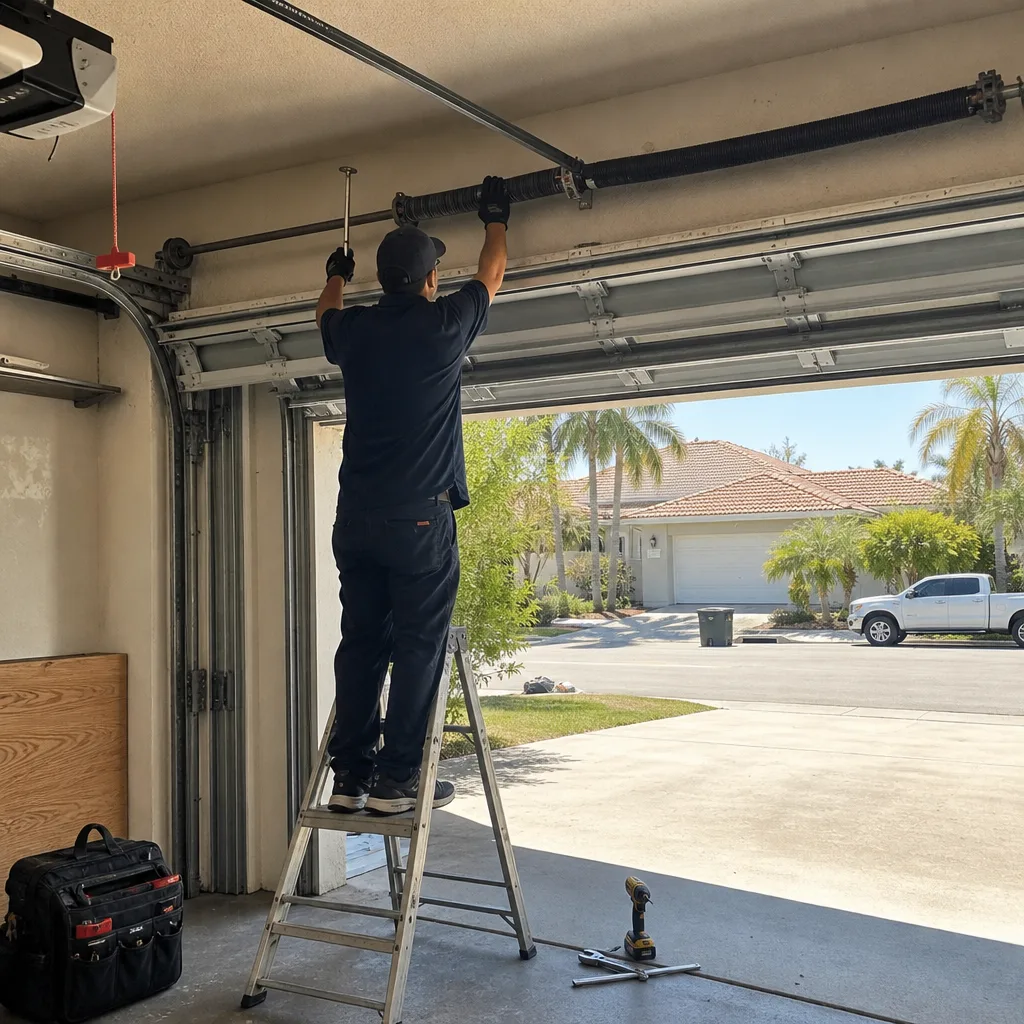
Last updated October 16, 2026
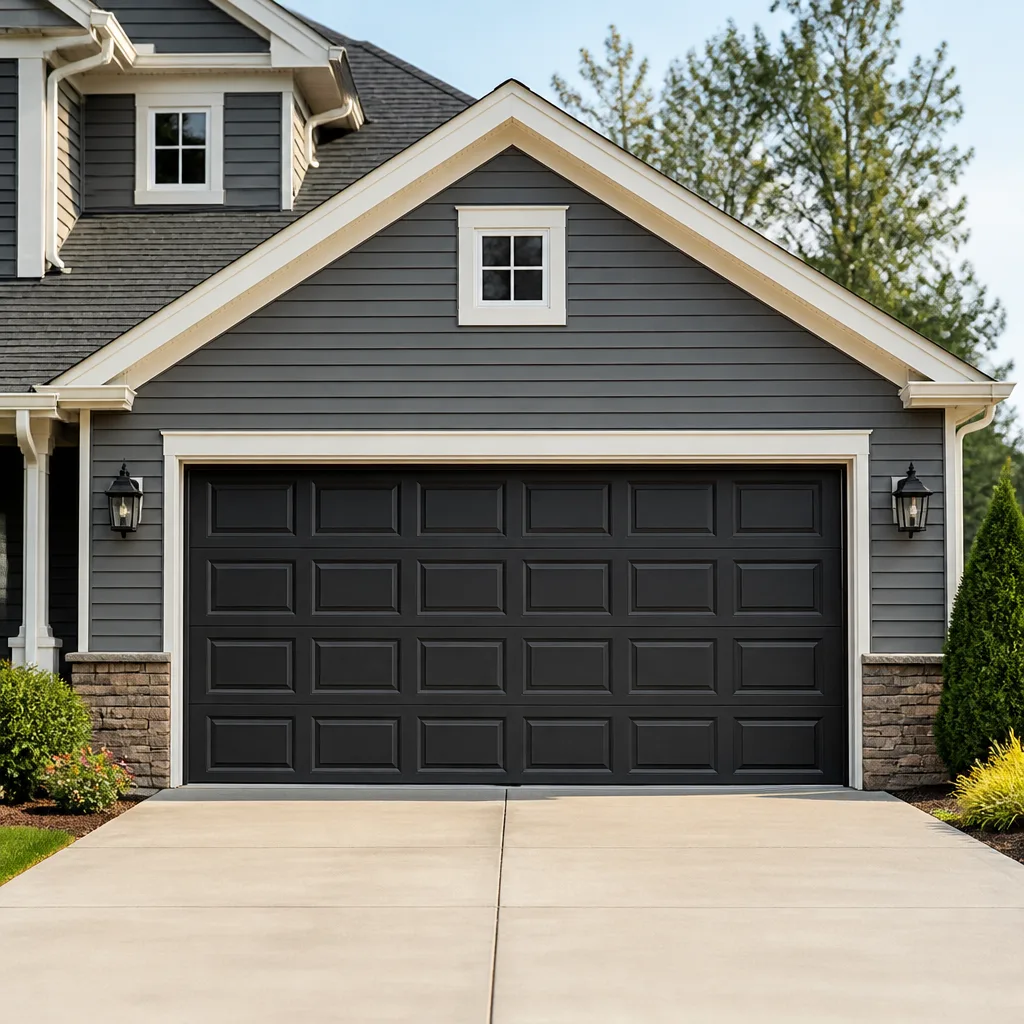 Raised-panel steel
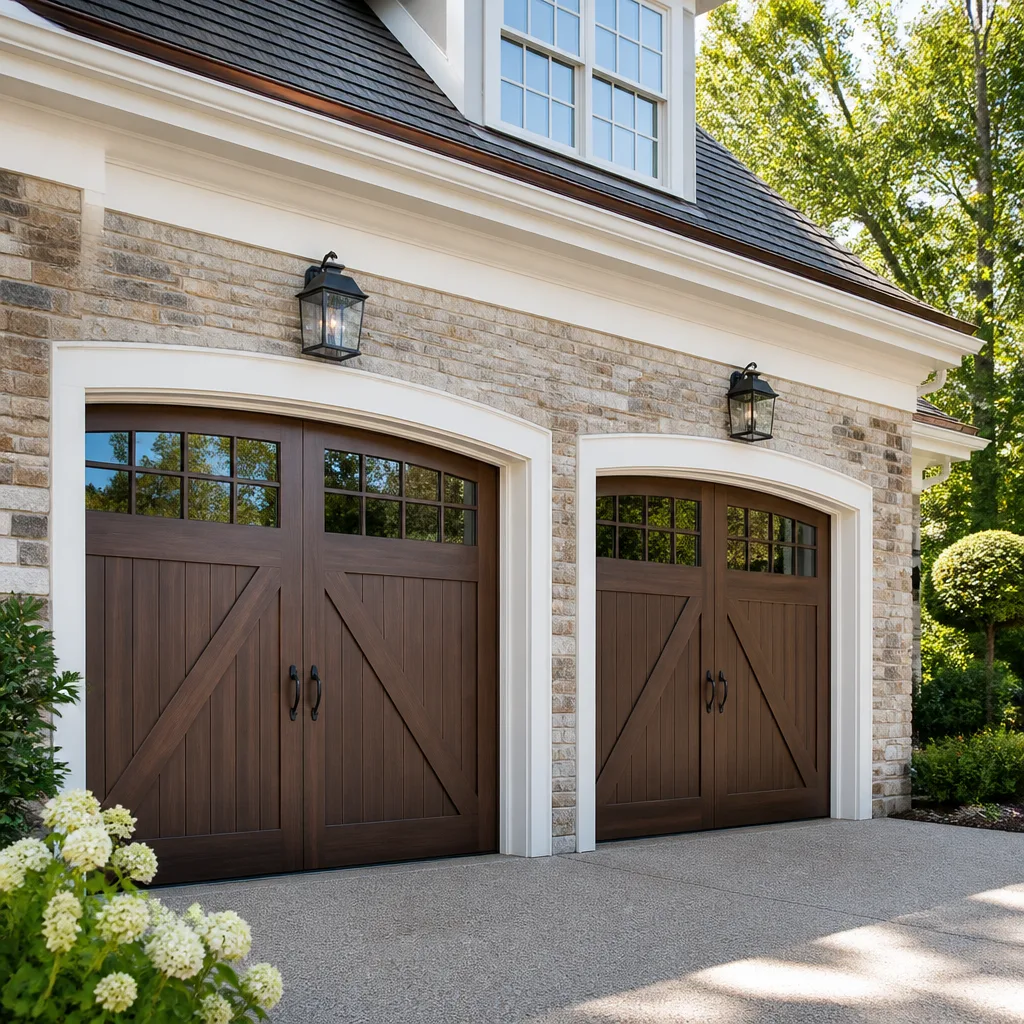 Carriage house
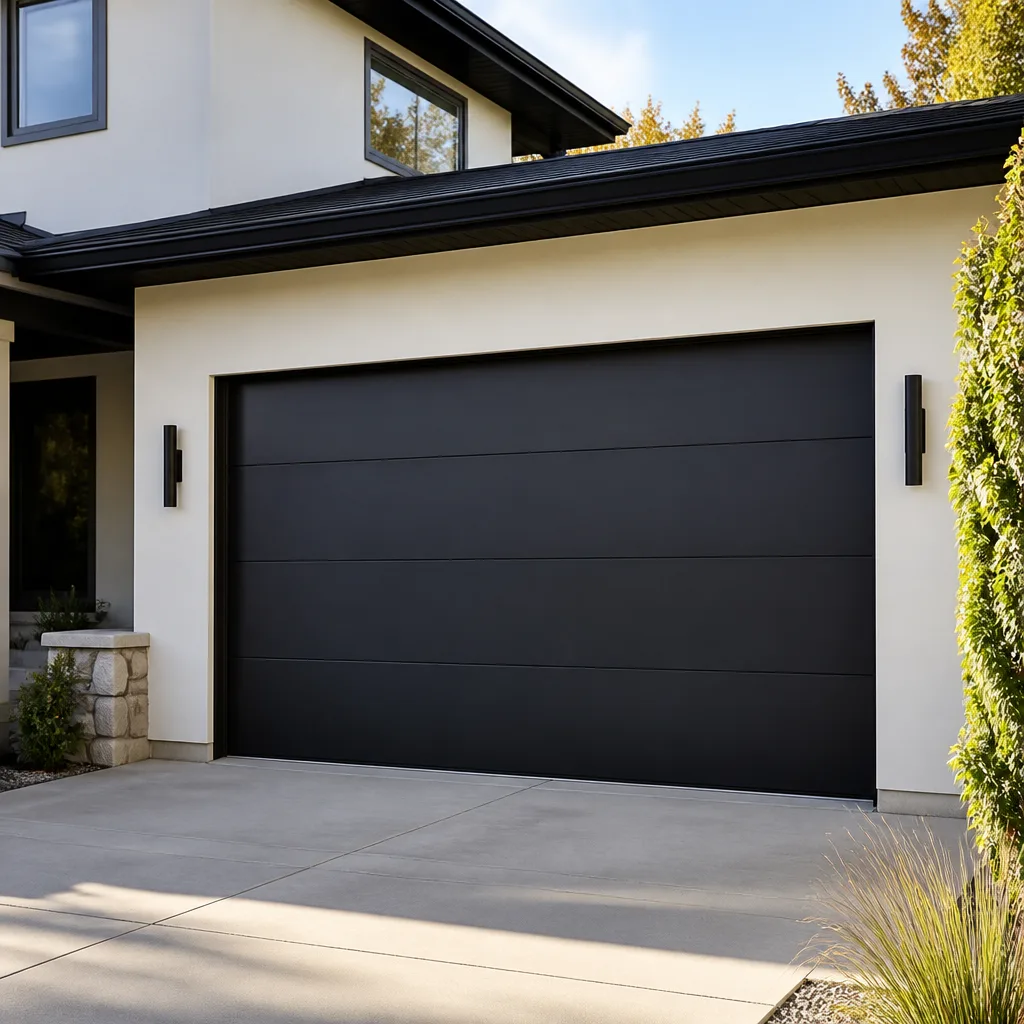 Modern flush
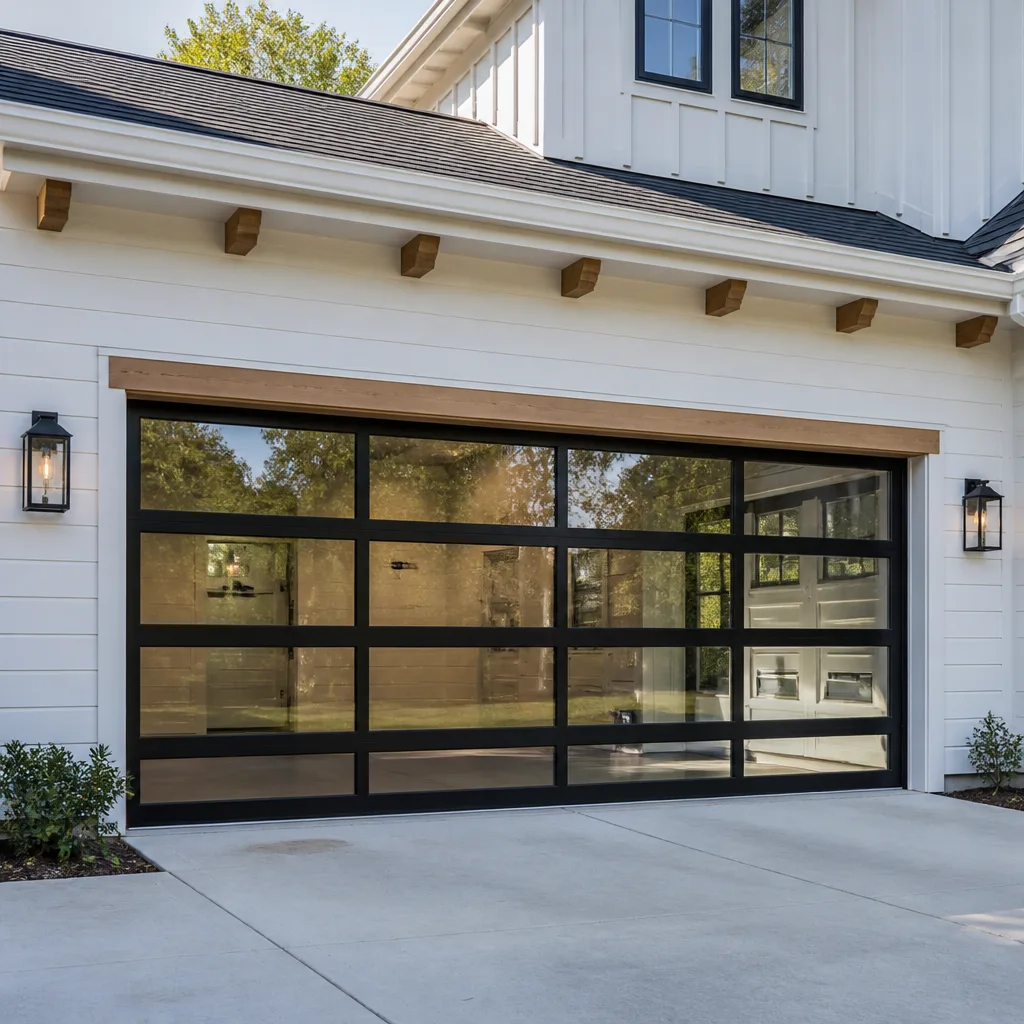 Full-view glass
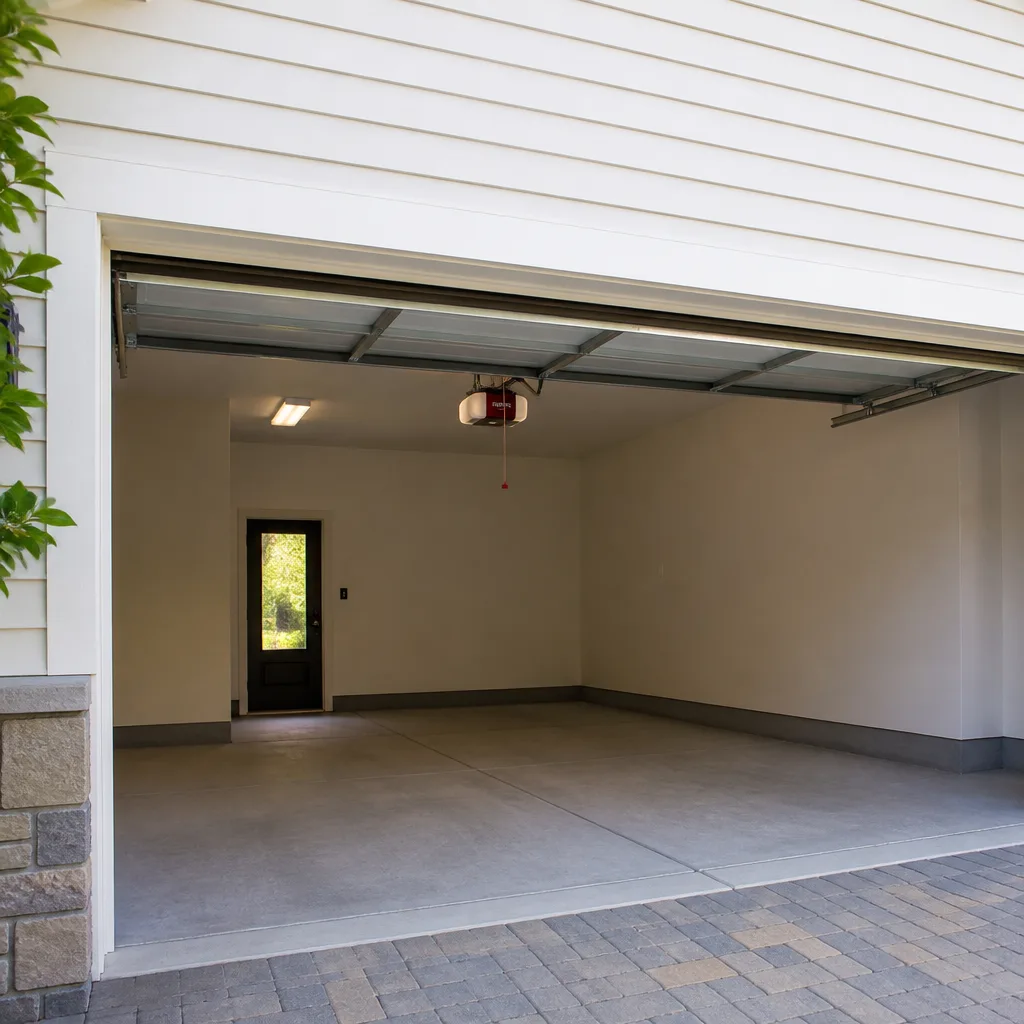 LiftMaster openers
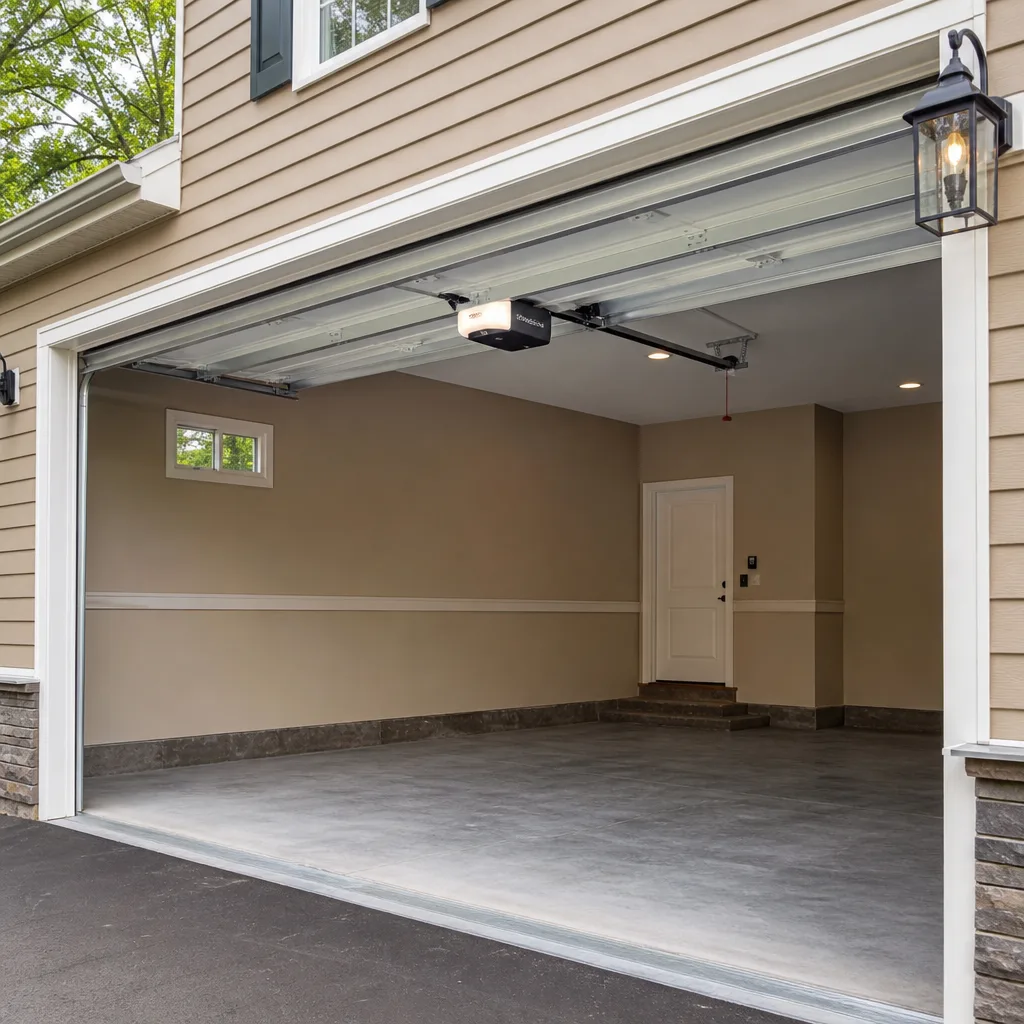 Chamberlain openers
Full 25-point door and opener safety check with every visit - springs, cables, rollers, tracks, and your LiftMaster or Chamberlain opener included
You get a price before we start. It does not change when the truck arrives.
Get your free estimateThe Complete Guide to Garage Door in Fort Lauderdale
Fort Lauderdale sits inside a High-Velocity Hurricane Zone, which means a garage door that passed code in Orlando can fail inspection here. That fact alone explains why most of the “universal” advice online about garage doors falls apart the moment you apply it to a home in Broward County. This guide walks you through the four separate decisions every Fort Lauderdale homeowner actually faces: material, mechanism, weather rating, and contractor. For DIY vs Professional Garage Door: The Fort Lauderdale Homeowner’s Decision Guide on tackling repairs yourself, see our dedicated post. Get any one wrong in this climate and you’ll pay for it twice.
Quick Answer
A Fort Lauderdale garage door must be selected for three things at once: hurricane-rated construction that meets Broward County HVHZ code, hardware that tolerates salt air and humidity without corroding, and an installer who provides a written price before work begins. Most residential doors in this market cost between $1,200 and $4,500 installed, with hurricane-rated models starting around $2,000. See our Garage Door Cost Breakdown: The Fort Lauderdale Homeowner’s Reference for 2026 for full pricing details. The contractor you choose matters as much as the door itself.
Styles & brands we work with
Table of Contents
- Why HVHZ Code Changes Everything in Fort Lauderdale
- Design Pressure Ratings vs. Real Installed Performance
- Salt-Air Corrosion: What Coastal Air Does to Hardware
- Choosing the Right Material for South Florida
- The Mechanism Decision: Springs, Openers, and What They Cost
- What a Written Pre-Work Quote Must Contain in Florida
- The One-Year Labor Guarantee Standard
- Common Mistakes to Avoid
- When to Call a Professional
- Frequently Asked Questions
Why HVHZ Code Changes Everything in Fort Lauderdale
Fort Lauderdale and the rest of Broward County sit within a High-Velocity Hurricane Zone, or HVHZ. This is not a marketing label. It is a building-code designation that governs how structures must resist wind-driven debris and pressure during a named storm. Any garage door installed in Fort Lauderdale must meet the Florida Building Code’s HVHZ requirements, which are stricter than the wind-load standards used in Central Florida or the Panhandle. Our guide to Garage Door Permits, Codes & Inspections in FL: What You Need to Know covers the compliance process in detail.
What this means in practical terms:
- Your door must be tested and approved for wind loads specific to your home’s exposure category and roof height, not a generic “hurricane rated” sticker.
- The door must resist impact from a 9-pound 2×4 traveling at 34 miles per hour, per the large-missile impact test. Some inland-rated doors fail this test outright.
- Broward County requires product approvals with a specific Notice of Acceptance (NOA) number. If the door you buy doesn’t have a current NOA for your municipality, it will not pass inspection.
- Reinforcement posts, heavier gauge tracks, and specific anchoring methods are code-mandated for HVHZ doors. A standard residential door installed with generic hardware won’t meet the standard.
We regularly replace doors in neighborhoods like Victoria Park and Rio Vista where a homeowner bought a door online or from a big-box retailer, only to have it red-tagged by a building inspector. The door itself might be fine for inland Florida. It just wasn’t approved for Fort Lauderdale’s wind zone. Checking the NOA before you buy saves that entire headache.
For repairs, the same logic applies. A garage door repair in Fort Lauderdale that meets code means the technician uses hardware rated for the original door’s wind-load classification. If your door is hurricane-rated, the springs, cables, and brackets must be compatible with that system, not whatever generic part is on the truck.
Design Pressure Ratings vs. Real Installed Performance
Every hurricane-rated garage door carries a design pressure rating, expressed in pounds per square foot (psf). A common rating for Fort Lauderdale homes is +45/-50 psf or higher, depending on the home’s location and roof height. The rating is a laboratory number. What actually protects your home is how well the door is installed.
The gap between the two is where failures happen. Here’s how to verify installed performance instead of trusting a sticker:
- Confirm the NOA matches your address. The approval must list the product, the wind-load rating, and the approved anchoring method. If your address falls outside the listed parameters, the approval doesn’t apply.
- Check that the jamb brackets, track, and fasteners match the approved assembly. The NOA specifies exact hardware. Substituting a generic bracket voids the rating even if the door panel itself is approved.
- Verify the door was installed by someone who understands HVHZ anchoring. Anchors must be embedded into the concrete or masonry at specified depths and intervals. A door that’s just screwed into the opening will pull free under negative pressure.
- Ask for a photo of the anchor installation before the trim goes on. Reputable technicians in Fort Lauderdale document this because they know a re-inspection after a storm is the worst time to discover the anchors were skipped.
In our experience, the most common failed-inspection issue in Fort Lauderdale isn’t the door. It’s the anchoring. The panel has the right rating, but the installation used the wrong fasteners or skipped the reinforcement posts entirely. That’s why the written quote should specify the anchoring method, not just the door model.
Salt-Air Corrosion: What Coastal Air Does to Hardware
Homes east of Federal Highway in Fort Lauderdale, from Lauderdale Harbors down through Harbor Beach, live in a salt-air environment that eats standard garage door hardware. The same is true for properties along the Intracoastal and the New River. Steel springs, hinges, cables, and brackets that would last 15 years inland can develop visible rust in three to five years here.
What we see in coastal Fort Lauderdale neighborhoods:
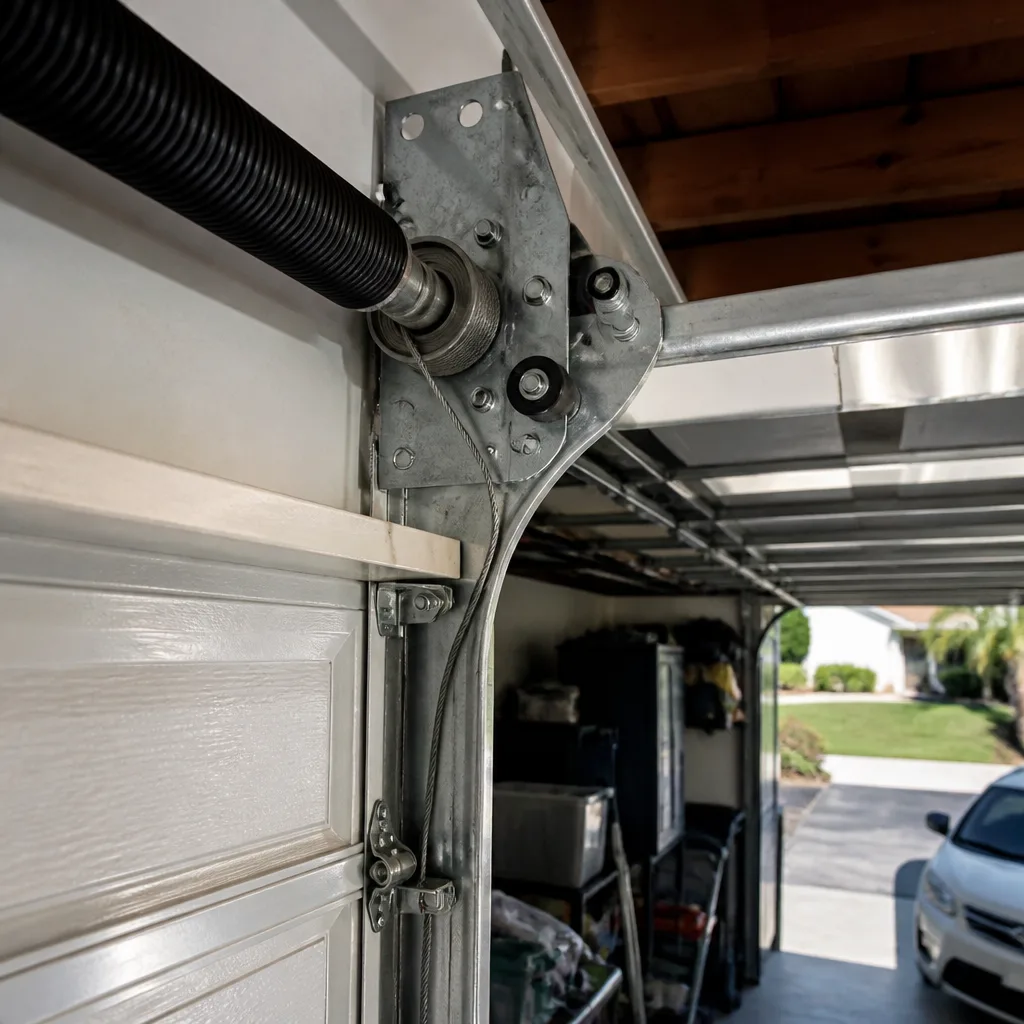
- Extension and torsion springs rust at the coil contact points, creating stress fractures that lead to sudden breakage. A snapped torsion spring is the most common emergency call we get from coastal zip codes.
- Galvanized cables fray where they wrap around the drum, especially on doors facing east into the prevailing breeze.
- Hinges and roller stems seize from corrosion, which forces the opener to work harder and accelerates motor wear.
- Bottom brackets and fasteners rust through entirely, leaving the cable attached to a bracket that’s one hard cycle away from failing.
If you live within two miles of the Atlantic or the Intracoastal, choose hardware with a marine-grade coating or upgrade to stainless steel cables and brackets. It adds cost upfront but prevents a spring or cable failure at the worst possible moment.
For any rusted component, have it replaced before it fails under tension. A garage door cable repair in Fort Lauderdale typically runs $150 to $275, depending on cable type and drum condition. That’s a fraction of what it costs when a cable snaps while the door is mid-cycle and the panel slams down hard enough to bend the track or break the glass in the top section.
Choosing the Right Material for South Florida
The material decision drives the price, the maintenance burden, and how the door performs in a storm. Here’s how the common options stack up in Fort Lauderdale’s climate:
- Steel with a polyurethane core: The workhorse of South Florida. Heavy gauge steel skins over an insulated core provide good wind resistance, low maintenance, and solid energy performance for attached garages. Expect $1,800 to $3,800 for an HVHZ-rated model, installed. Clopay and Amarr both make strong options in this category.
- Aluminum with glass panels: Common in modern Fort Lauderdale homes, especially in Victoria Park and Sailboat Bend. Looks clean, resists salt-air corrosion better than steel, but offers less impact resistance. HVHZ-rated aluminum and glass doors run $3,500 to $7,000 and up. The glass must be laminated impact-rated to pass code.
- Wood or wood composite: Beautiful on Mediterranean-style homes in Rio Vista, but the humidity and salt air here demand more maintenance than most homeowners want to give. Solid wood rarely meets HVHZ impact standards. A wood-look steel door gives the aesthetic without the liability.
- Fiberglass: Resists corrosion well, but the lightweight panels struggle in high wind zones unless heavily reinforced. We recommend fiberglass mainly for doors on the leeward side of a structure, not as a primary hurricane barrier.
One more Fort Lauderdale-specific factor: attached garages here get hot. The sun beats on a south-facing or west-facing door all afternoon, and that heat transfers into the garage and eventually the house. A door with a polyurethane core and a lighter exterior color makes a measurable difference. Not enough to cool the garage to living-space temperatures, but enough that a bedroom above the garage doesn’t feel like a sauna by 4 p.m.
The Mechanism Decision: Springs, Openers, and What They Cost
The second decision is the mechanism. This is where homes with a perfectly good panel still need work, because the panel and the mechanism age on different timelines.
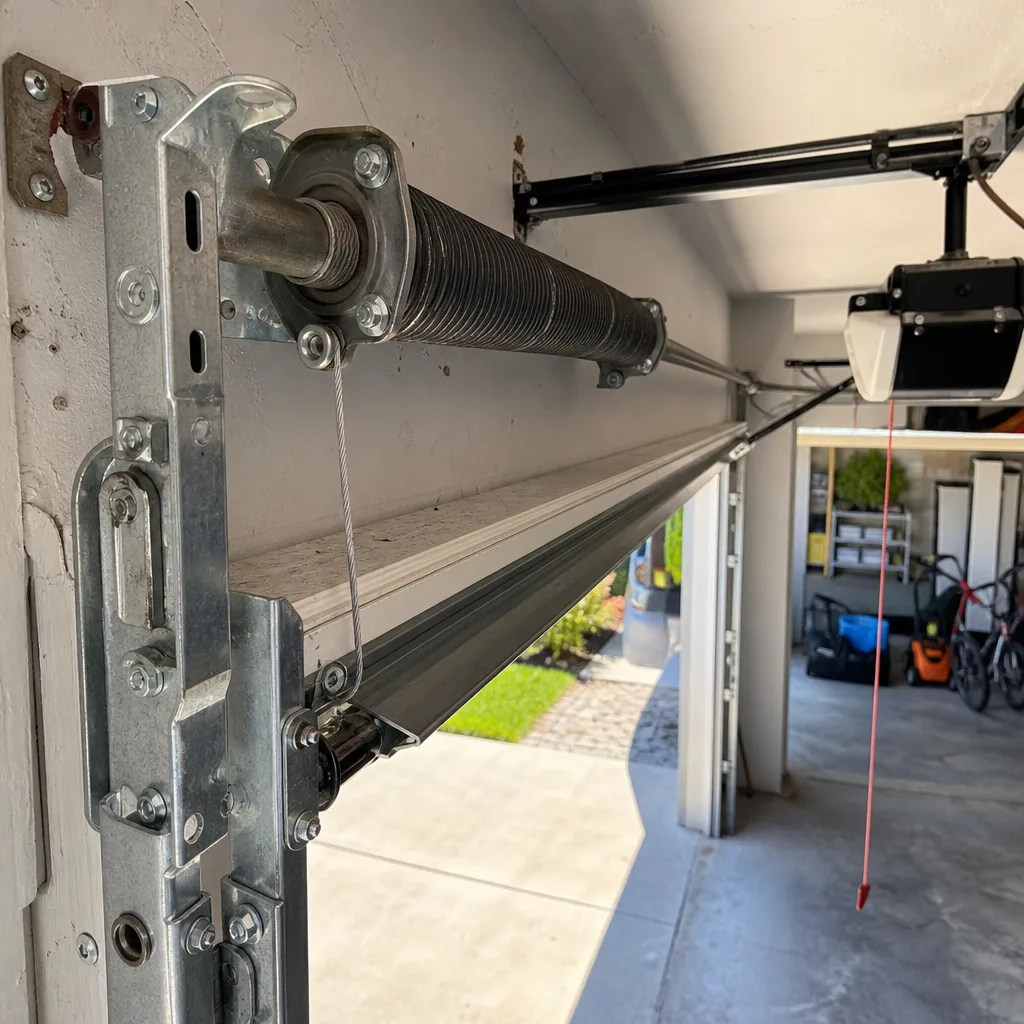
Torsion springs are the standard for Fort Lauderdale garage doors, especially on anything over 8 feet wide or hurricane-rated. These are the thick coiled springs mounted above the door that bear most of the lifting load. They’re rated in cycles, not years. A cheap spring rated for 10,000 cycles might last four years in a busy household. A higher-cycle spring rated for 25,000 or more can last a decade or longer.
Spring replacement in Fort Lauderdale typically costs $180 to $450 per spring, installed, depending on wire gauge and cycle rating. Most doors use two springs. When one breaks, replace both. The unworn spring has the same mileage as the broken one, and the labor is the same whether you do one or two.
Openers are the second mechanism decision. LiftMaster and Chamberlain dominate this market for a reason: their DC-motor models run quieter and include battery backup, which matters when a storm knocks out power and you need to get the car out. Genie makes reliable openers too, and we service all three along with Craftsman and other major brands.
A quality wall-mount opener (also called a jackshaft opener) is worth considering if your garage has a low ceiling or if you want to free up ceiling space. They cost more than a traditional belt-drive opener, typically $550 to $850 installed, but they’re quieter and eliminate the center rail that can interfere with overhead storage racks.
For any opener that’s making unusual noise, moving the door unevenly, or reversing without reason, start with diagnosis before replacement. A garage door opener repair in Fort Lauderdale usually costs between $120 and $300 when the problem is a sensor, logic board, gear, or limit-switch adjustment. Replacement only makes sense when the motor itself is failing or the unit is more than 12 to 15 years old.
What a Written Pre-Work Quote Must Contain in Florida
Florida contractor law requires that any job above a certain dollar threshold be covered by a written contract. Even below that threshold, a written quote protects you in ways a verbal estimate never will. Every quote a Fort Lauderdale homeowner accepts should contain these items:
- Scope of work. Exactly what will be done: door replacement, spring replacement, cable replacement, opener repair. No vague language.
- Materials with model numbers. Not “hurricane-rated door” but “Clopay model XXXX with NOA #XX-XXXX, size 16×7, color white, insulated.” The specifics are what make the quote enforceable.
- Total price, including labor, materials, and any disposal or permit fees. If a line item is listed as “TBD,” ask for it to be resolved before you sign.
- Payment terms. When payment is due, what forms are accepted, and whether a deposit is required.
- Start and completion dates. Even an approximate window written down is better than a verbal promise.
- Warranty terms. What is covered, for how long, and what happens if the repair fails. This is where verbal warranties disappear. Get it in writing.
At Brock Garage Doors Fort Lauderdale, we hand over a written price before any work starts, always. The number on the invoice matches the number you approved. You’ll never hear a technician revise a quote after the door is apart on the floor.
The One-Year Labor Guarantee Standard
In garage door repair, the industry norm is a verbal promise that evaporates the moment the truck leaves your driveway. Technicians say “if anything goes wrong, call me.” Then the phone rings to a voicemail that never gets returned.
A real labor guarantee is written. It states the repair, the date, and the coverage period. If the repair fails within that period, the company returns and corrects it at no additional charge. Not a discounted repair, not a service fee to come look. No charge.
That’s the standard we work to as an independently owned and operated location within the Garrison Partners network. Every repair receives a written 365-day guarantee. If a covered repair fails within that year, a technician returns and makes it right at no cost. The guarantee is in writing on every job because that’s what “The Garrison Standard” means: show up in the window, price in writing, do it by the book, leave it clean, stand behind it for a year.
When you’re comparing contractors in Fort Lauderdale, ask this one question: “Will you put the warranty in writing?” The answer tells you everything.
Common Mistakes to Avoid
- Buying a door before checking the NOA for Fort Lauderdale. A door that looks identical on the showroom floor might not carry a Broward County product approval. Verify the approval before you pay for the door, not after it’s sitting in your driveway.
- Choosing the cheapest spring replacement. A low-cycle spring rated for 10,000 cycles will fail again in a few years. In coastal Fort Lauderdale, where salt air adds corrosion stress, high-cycle springs are insurance, not an upgrade.
- Ignoring rust on cables and brackets. Rust is a countdown timer, not a cosmetic issue. Once a cable shows visible fraying or a bracket shows pitting, the failure is a matter of time and usually happens under maximum tension.
- Not asking about the anchoring method. The panel might be HVHZ-rated, but if the installer anchors it with standard fasteners, you’ve paid for a storm rating you don’t have. Ask how the door will be anchored and confirm it matches the NOA.
- Accepting a verbal quote. In Florida, if it isn’t written, it doesn’t exist. That’s true for the price and for the warranty. A verbal agreement is a disagreement waiting to happen.
- Putting off a noisy or unbalanced door. A door that’s loud or fighting the opener is telling you something. Ignoring it turns a $150 tune-up into a $400 spring replacement or a $250 cable repair.
- Assuming all openers work with all doors. Hurricane-rated doors are heavier and require openers with enough horsepower and torque. A light-duty opener on a wind-rated door burns out quickly. Match the opener to the door’s weight and rating.
When to Call a Professional
Torsion springs under tension are dangerous. When one snaps during a repair attempt, the released force can cause serious injury. Cables under load carry the same risk. If your door has a broken spring, a frayed cable, or a door that’s come off its tracks, don’t try to fix it yourself. Call someone who carries the right parts, knows the torque settings, and has the winding bars and the training to do it safely.
You should also call a professional if your door failed a wind-load inspection, if you’re not sure whether your current door meets HVHZ code, or if you want a written quote that specifies materials, anchoring, and warranty terms. Brock Garage Doors Fort Lauderdale offers free estimates throughout Fort Lauderdale. Call (754) 354-7491 and we’ll send a background-checked, uniformed technician who will hand you a written price before any work starts.
Frequently Asked Questions
A new hurricane-rated garage door in Fort Lauderdale typically costs between $2,000 and $4,500 installed, depending on size, material, insulation, and design pressure rating. Basic non-rated doors run $1,200 to $1,800, but they’ll fail Broward County code review if your municipality requires HVHZ compliance. Call (754) 354-7491 for a specific quote based on your home’s wind zone.
Spring replacement in Fort Lauderdale runs $180 to $450 per spring, installed. Most doors take two springs, so budget $360 to $900 total. High-cycle springs rated for more years of use sit at the upper end of that range. Replacing both springs at once is standard practice since both carry the same wear.
HVHZ means High-Velocity Hurricane Zone, the Florida Building Code designation that applies to all of Broward County including Fort Lauderdale. Any new garage door must carry a current Notice of Acceptance and be installed using the anchoring method specified in that approval. Doors rated for Central Florida wind loads don’t meet HVHZ standards and will fail inspection.
For spring replacements, cable repairs, and opener failures, same-day service is usually available in Fort Lauderdale, and our trucks carry common parts for LiftMaster, Chamberlain, Genie, and Clopay systems. A live person answers the phone 24 hours a day at (754) 354-7491, including weekends. Call us and we’ll schedule a repair window that works for you.
No. The price you’re quoted before work begins is the price you pay. We put the quote in writing and it doesn’t change unless you approve additional work in writing. If we find something unexpected during the repair, we stop and explain it before doing anything else. The number on the invoice matches the number you approved.
A garage door that won’t close fully is an open invitation, and a door without a working opener lock is easy to force. Beyond theft, a door that’s off-balance or sagging on one side puts stress on the track and hinges that leads to more expensive repairs. In storm season, a door that doesn’t seal properly also lets wind-driven rain into the garage. Get it fixed before it becomes a bigger problem. Call (754) 354-7491 for a free estimate.
The Bottom Line
A Fort Lauderdale garage door succeeds or fails on four decisions: the material, the mechanism, the weather rating, and the contractor. Choose a door with a current NOA for Broward County, hardware that tolerates salt air, a high-cycle spring, and an opener matched to the door’s weight. Then choose a contractor who puts the price and the warranty in writing before work begins and stands behind the job for a full year. That’s the difference between buying once and paying twice. Wade Mercer and the team at Brock Garage Doors Fort Lauderdale have served this market since 2001, and we’re ready when you are.
Written by Wade Mercer, Owner at Brock Garage Doors Fort Lauderdale, serving Fort Lauderdale since 2001.
See the difference
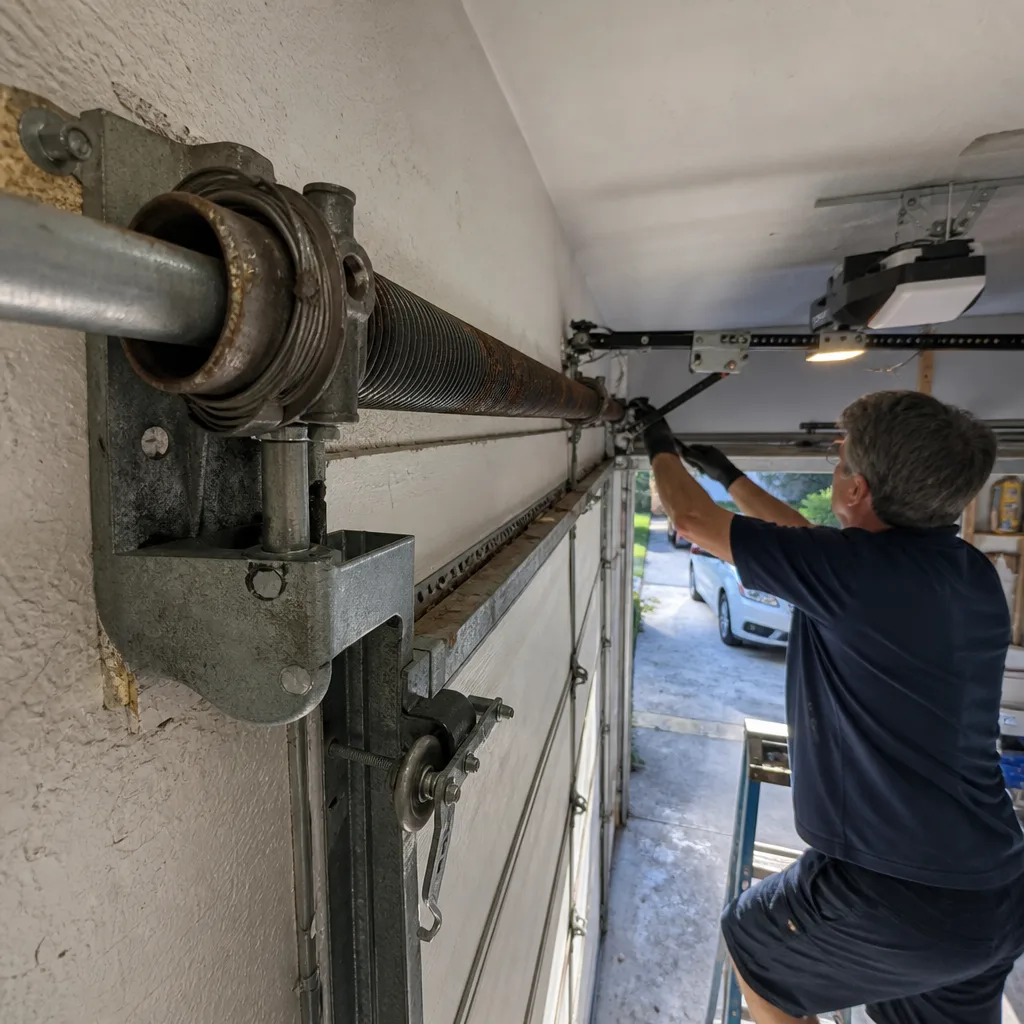 Before
 After
After Before
 After
After Before
 After
After