
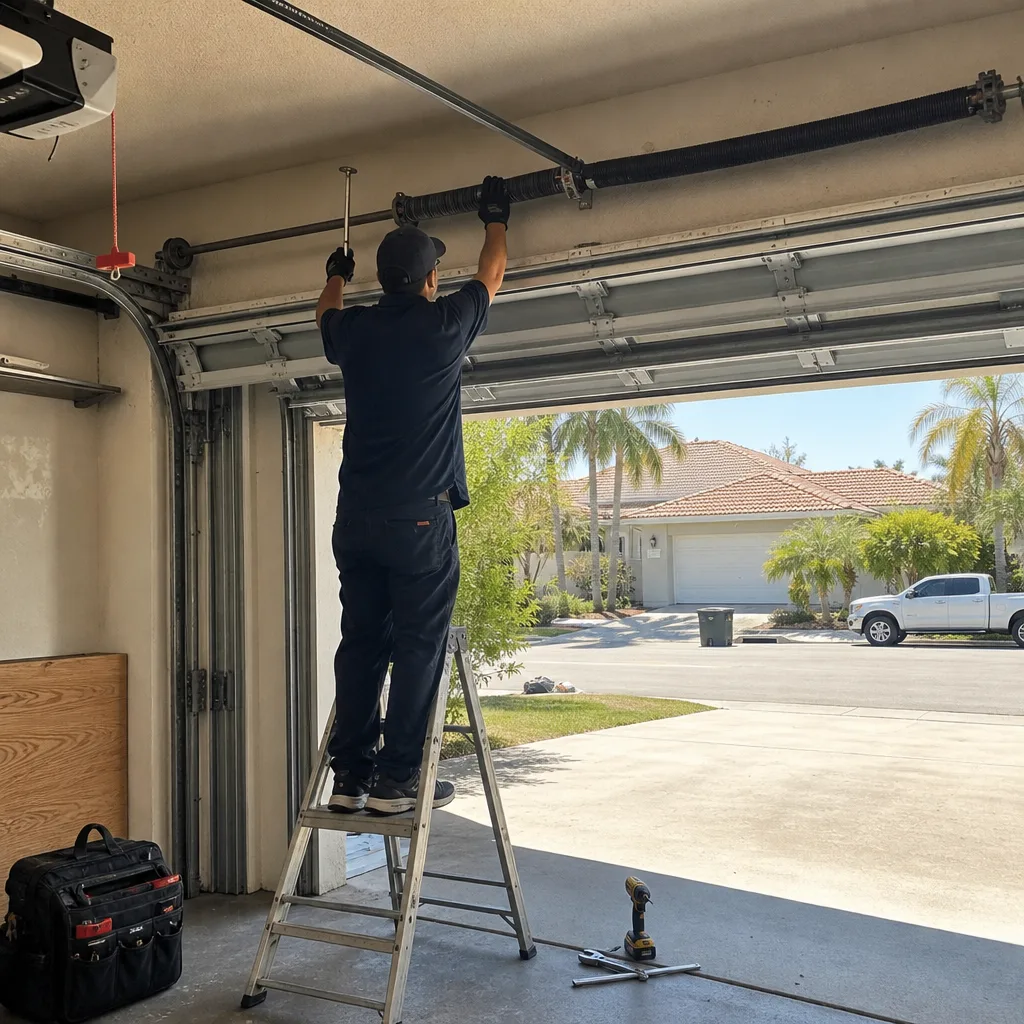
Last updated October 16, 2026
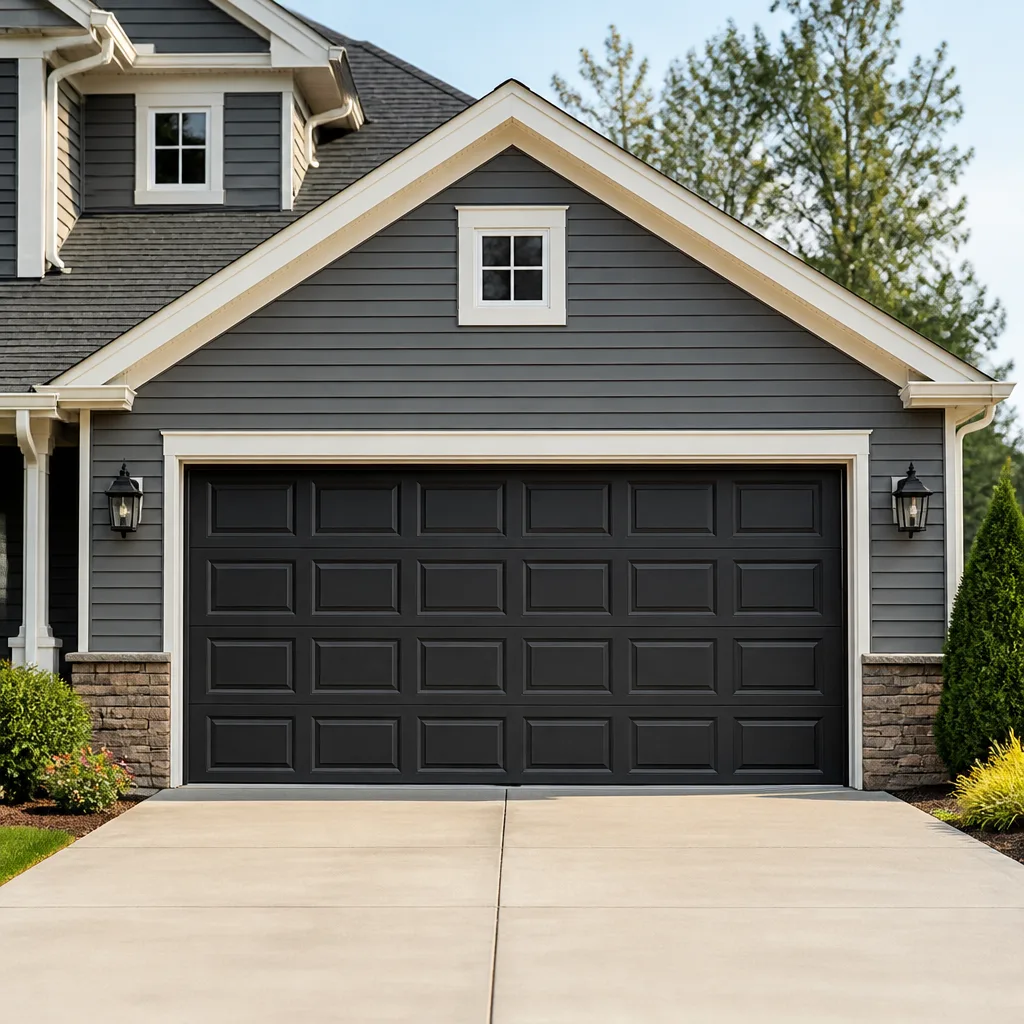 Raised-panel steel
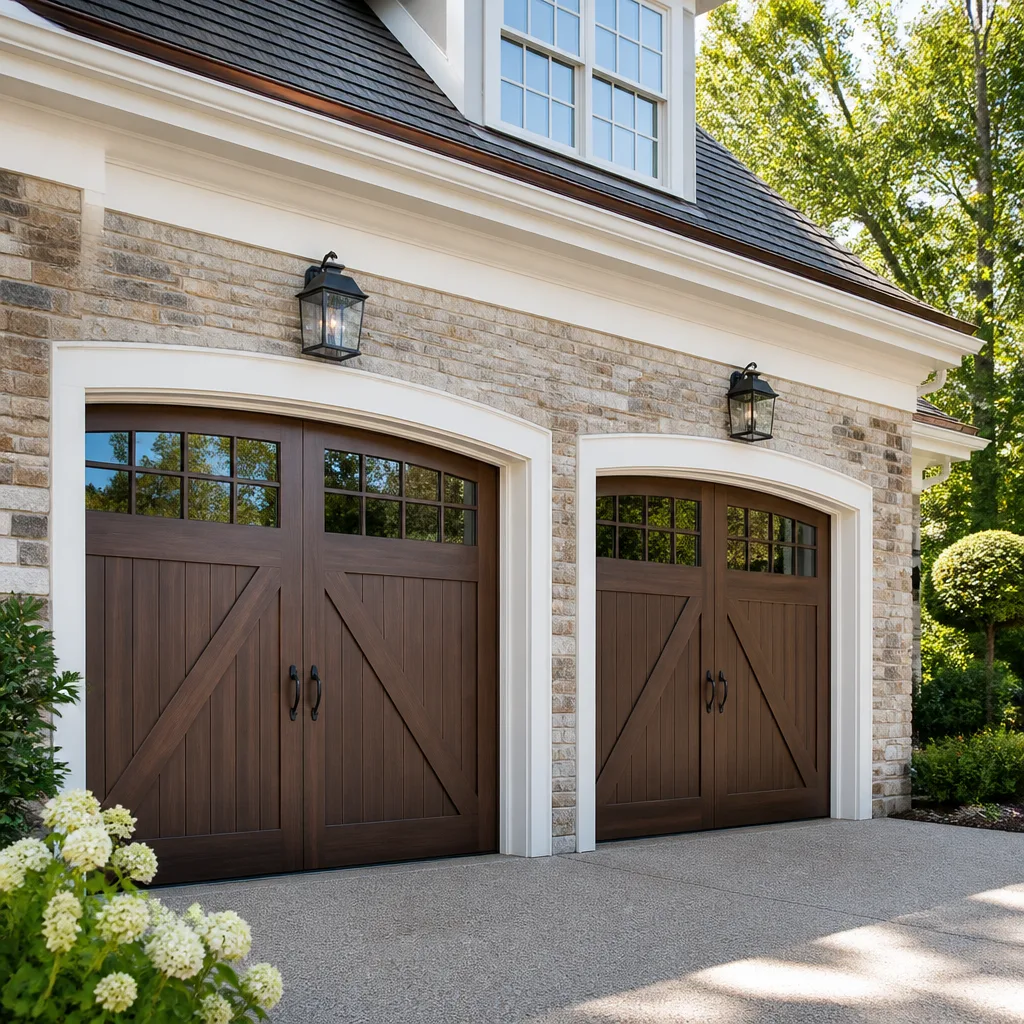 Carriage house
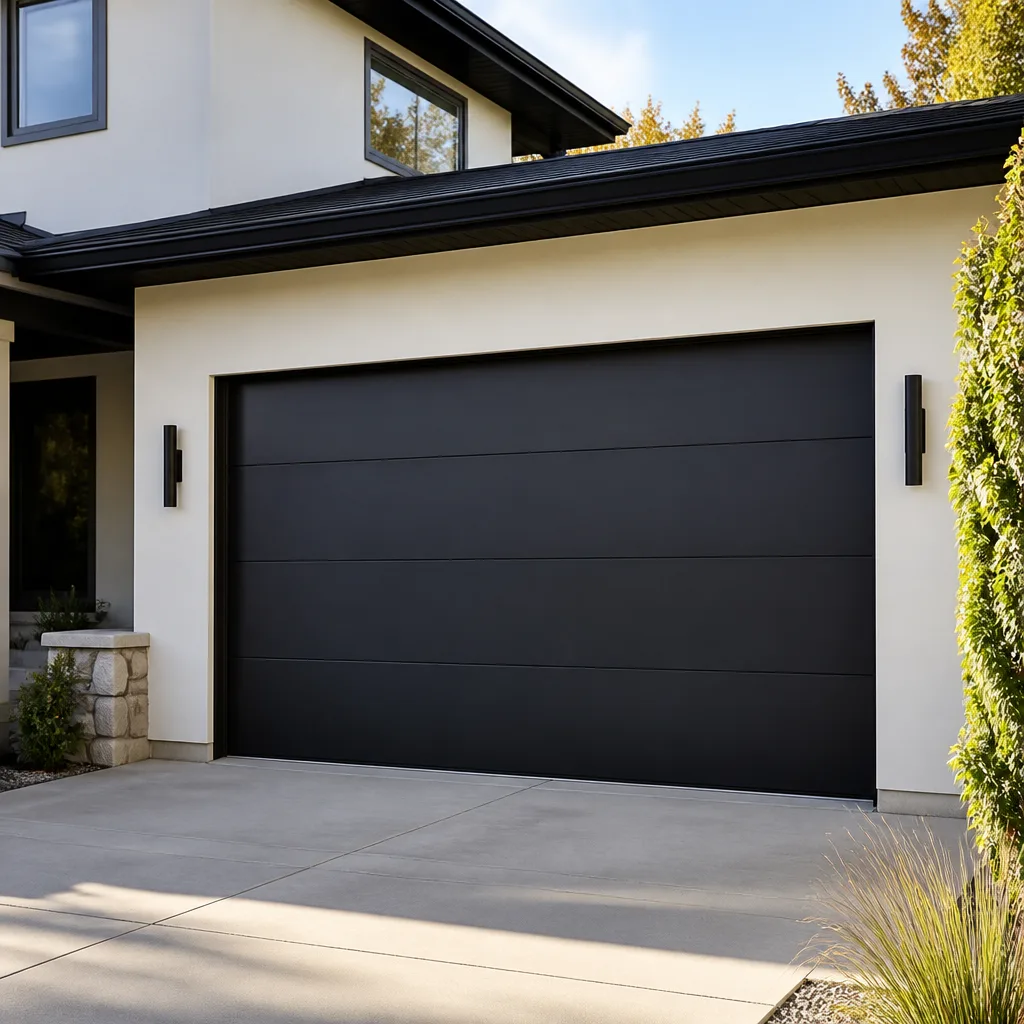 Modern flush
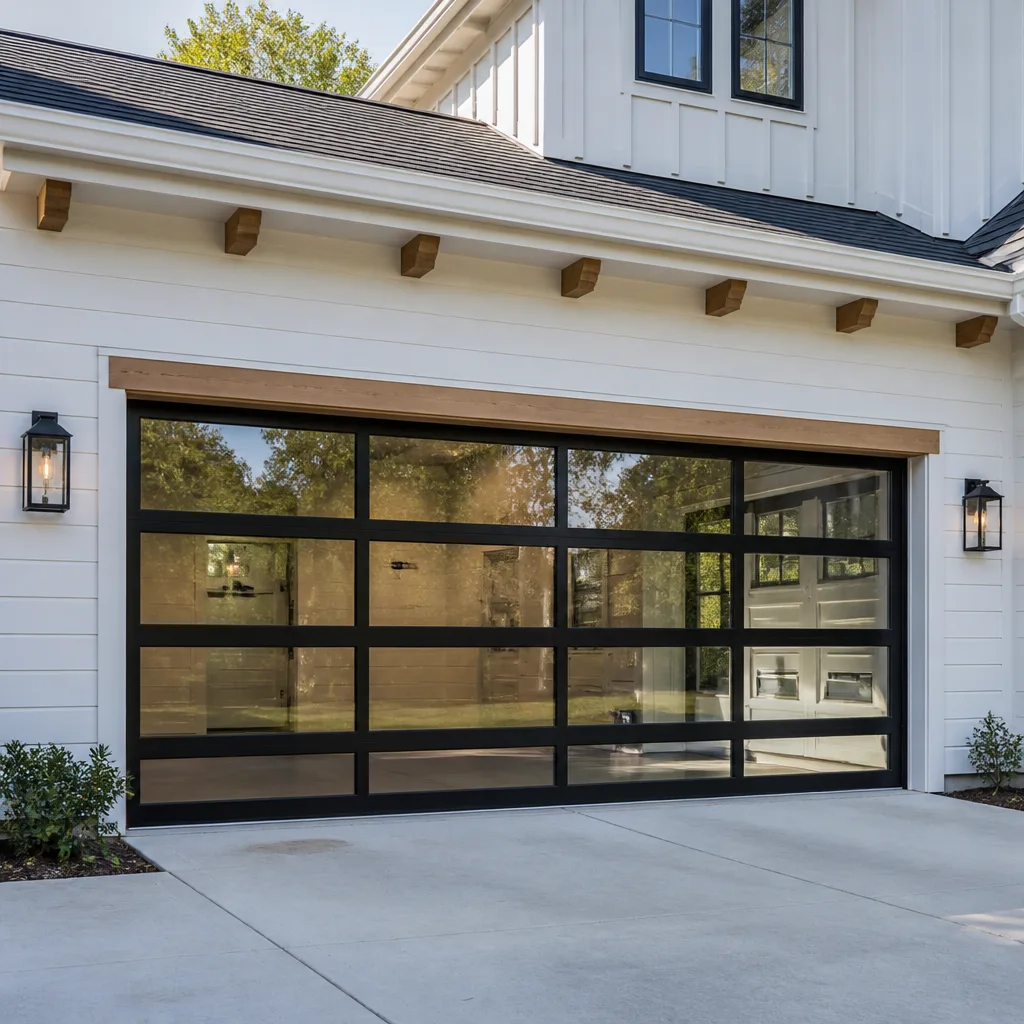 Full-view glass
 LiftMaster openers
 Chamberlain openers
Full 25-point door and opener safety check with every visit - springs, cables, rollers, tracks, and your LiftMaster or Chamberlain opener included
You get a price before we start. It does not change when the truck arrives.
Get your free estimateSeasonal Garage Door Care for Fort Lauderdale: Year-Round Homeowner’s Guide
October is the month most Fort Lauderdale garage doors quietly start to fail. Not because of wind or flying debris, but because hurricane-season humidity is still sitting on every hinge, bracket, and spring while homeowners have already moved on. The hardware keeps corroding long after the weather report calms down. This guide replaces the traditional four-season maintenance calendar with something that actually matches how South Florida behaves: a three-phase care cycle built around the dry season, the rainy season, and the hurricane months that overlap both. For a deeper dive, see The Complete Guide to Garage Door in Fort Lauderdale. You’ll learn what to check, when to check it, and which jobs are safe to handle yourself versus which ones demand a trained technician.
Quick Answer
Seasonal garage door maintenance in Fort Lauderdale means following a three-phase schedule, not a generic four-season calendar. The dry season (November through May) is for seal replacement and hardware inspection, April is your pre-hurricane deadline for bracing and reinforcement, and the rainy season (June through October) requires monthly checks of drainage, seal compression, and corrosion at the track line. Budget roughly $150 to $275 annually for professional tune-ups and catch small problems before they become $400-plus repairs.
Styles & brands we work with
Table of Contents
- Why Fort Lauderdale Breaks the Four-Season Rules
- Fort Lauderdale’s Three-Phase Care Cycle
- Dry-Season Tasks: November Through May
- Pre-Hurricane Season Checklist: The April 30 Deadline
- Rainy-Season Monitoring: June Through October
- Post-Storm Inspection Protocol
- The Annual Documentation Habit
- What Seasonal Maintenance Costs in Fort Lauderdale
Why Fort Lauderdale Breaks the Four-Season Rules
Most garage door maintenance guides you’ll find online were written for places with snow, frost, and ice. They tell you to lubricate before winter and check for rust after spring thaw. That advice doesn’t translate to Broward County. Fort Lauderdale’s climate operates on a completely different logic.
We have two dominant weather patterns: a dry season that runs from November through May and a rainy season that runs from June through October. Hurricane season officially spans June 1 to November 30, overlapping both. That overlap matters because the damage mechanisms change. During the dry season, low humidity dries out rubber weatherstripping and causes it to crack and shrink. During the rainy season, standing water at the door threshold attacks the bottom seal and track hardware. And during hurricane months, wind-loading stresses the panel joints and bracing in ways that quiet-weather maintenance never tests.
A garage door in Fort Lauderdale isn’t just a convenience. It’s rated to withstand specific wind pressures under Broward County building codes, and it’s often the largest single opening in your home’s exterior envelope. A seal failure isn’t just a drip on the floor. It’s how you get soaked drywall, swollen door panels, rusted tracks, and a pile of small problems that compound into a four-figure repair bill. Homeowners who follow a calendar written for Minnesota or Ohio end up checking the wrong things at the wrong time, and by October, the corrosion has already set in.
Fort Lauderdale’s Three-Phase Care Cycle
Instead of four seasons, work with three phases. Each phase has a different job, and each one feeds the next. If you commit to this cadence, you’ll catch roughly 80% of preventable garage door failures before they happen.
- Phase One: Dry-Season Hardening (November through May). Replace worn weatherstripping, inspect and tighten hardware, adjust the lubrication schedule, and document the door’s baseline condition.
- Phase Two: Pre-Hurricane Readiness (April, with April 30 as your deadline). Reinforce bracing, confirm wind-load compliance, test the balance, and verify that the door operates under backup power if you have it.
- Phase Three: Rainy-Season Monitoring (June through October). Check drainage monthly, inspect the bottom seal for compression loss, address any track rust at first sight, and run a post-storm inspection after any named storm passes.
This isn’t a complicated system. It’s three checkpoints, spread across the year, each one timed to the specific threat that season actually presents. Most Fort Lauderdale homeowners only discover something’s wrong when the door won’t open or a storm pushes water under the threshold. By then, the repair bill has usually tripled.
Dry-Season Tasks: November Through May
The dry season is your longest working window and the best time for anything involving adhesives, lubricants, or replacement parts. Low humidity means things dry faster and stay dry, which makes November through May ideal for seal replacement and hardware work.
Weatherstripping and Bottom Seals
Rubber weatherstripping shrinks in low humidity. You’ll notice it first at the corners of the door frame, where the seal pulls away from the jamb and leaves a visible gap. Over the course of a dry season, a seal that started snug in November can develop a quarter-inch gap by March. That’s enough to let in hot air, insects, and during an unexpected rain event, water.
Fort Lauderdale’s specific challenge is the combination of dry-season shrinkage followed by rainy-season soak. The seal cracks while dry, then water enters through the cracks once the rain starts. That’s why we recommend checking your bottom seal in March, before the transition, rather than waiting until June when the water’s already coming through.
Replace any seal that shows visible cracking, has lost its flexibility, or no longer maintains even contact with the threshold. A bottom seal in Fort Lauderdale typically lasts 3 to 5 years, but houses that face direct afternoon sun often replace them sooner because UV exposure accelerates the breakdown.
Why Lubrication Schedules Change Here
Up north, the standard advice is to lubricate your garage door twice a year, once in spring and once in fall. Fort Lauderdale’s humidity levels change that math. Our recommendation: lubricate every three months, regardless of phase. The constant moisture in the air means lubricant breaks down faster here, and the metal-on-metal contact points, especially the roller hinges and the torsion spring, need more consistent protection.
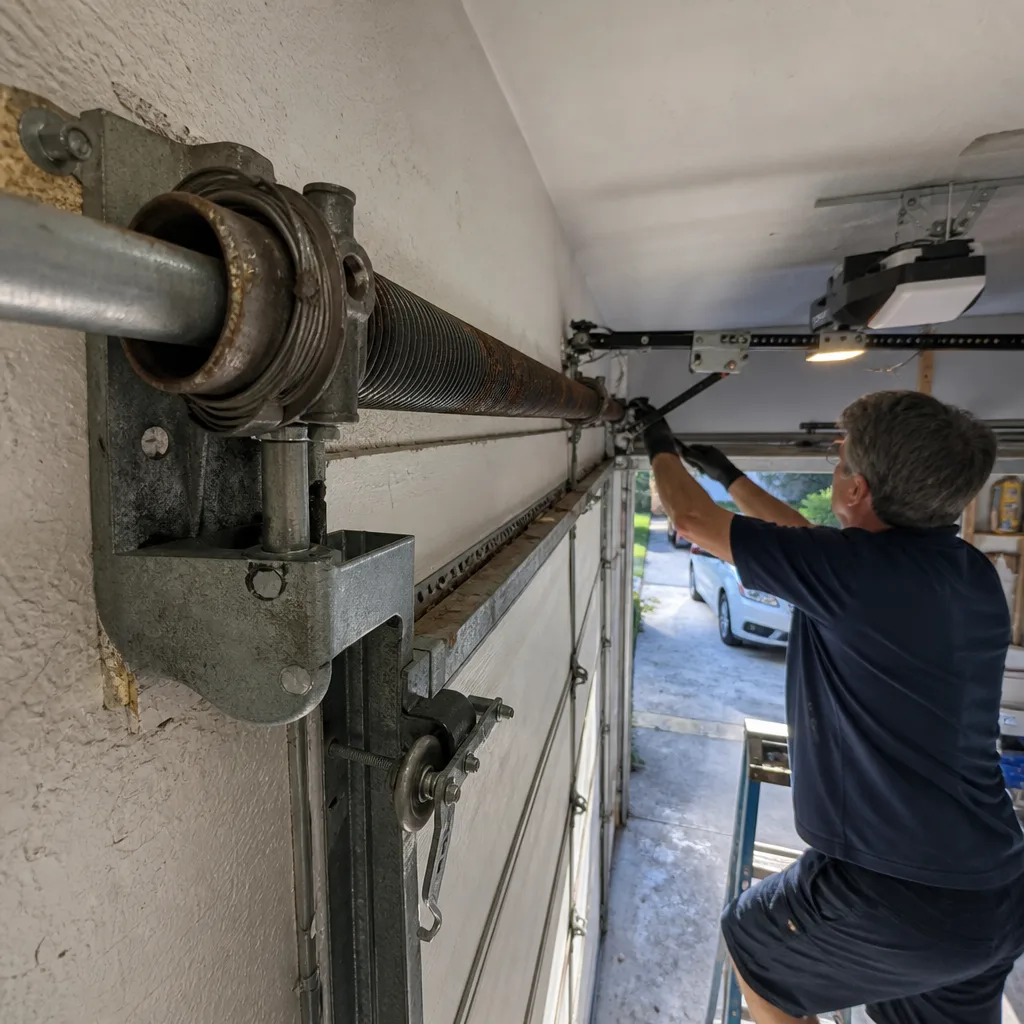
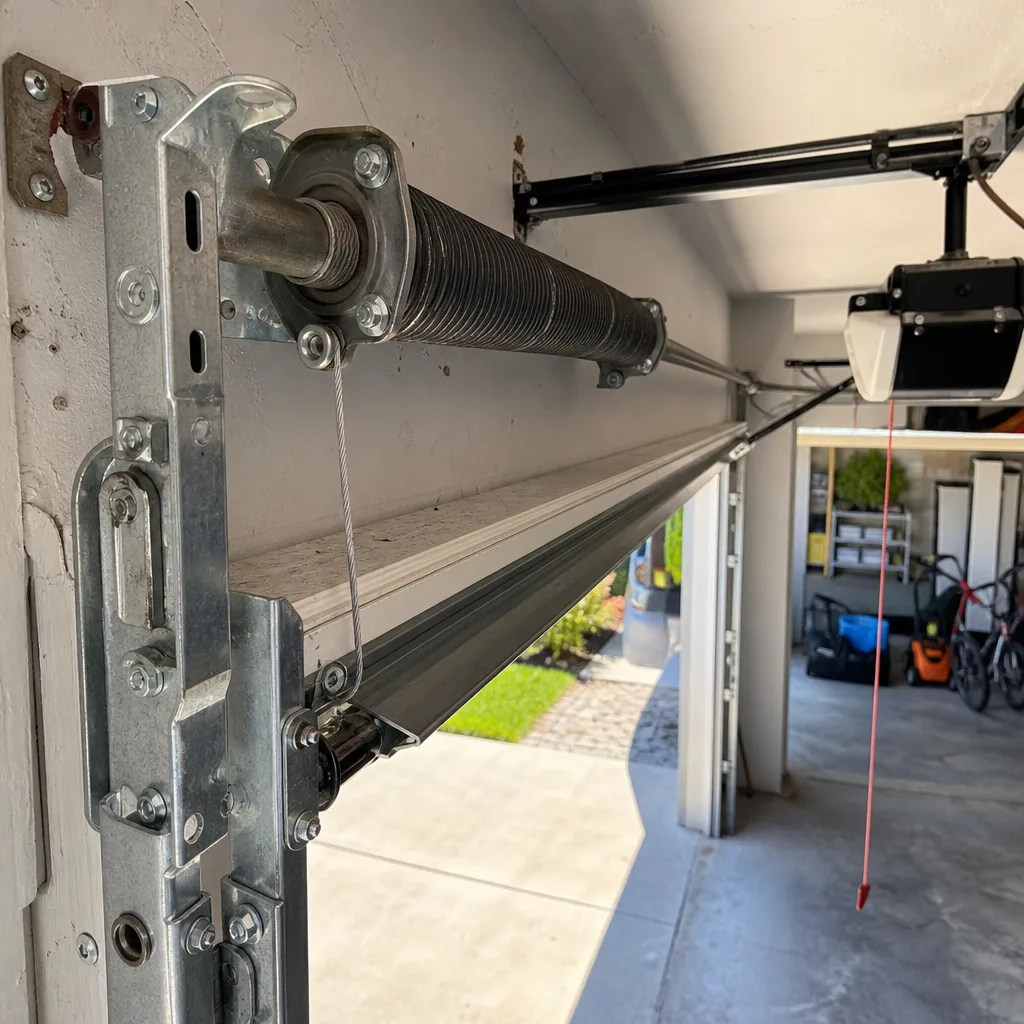
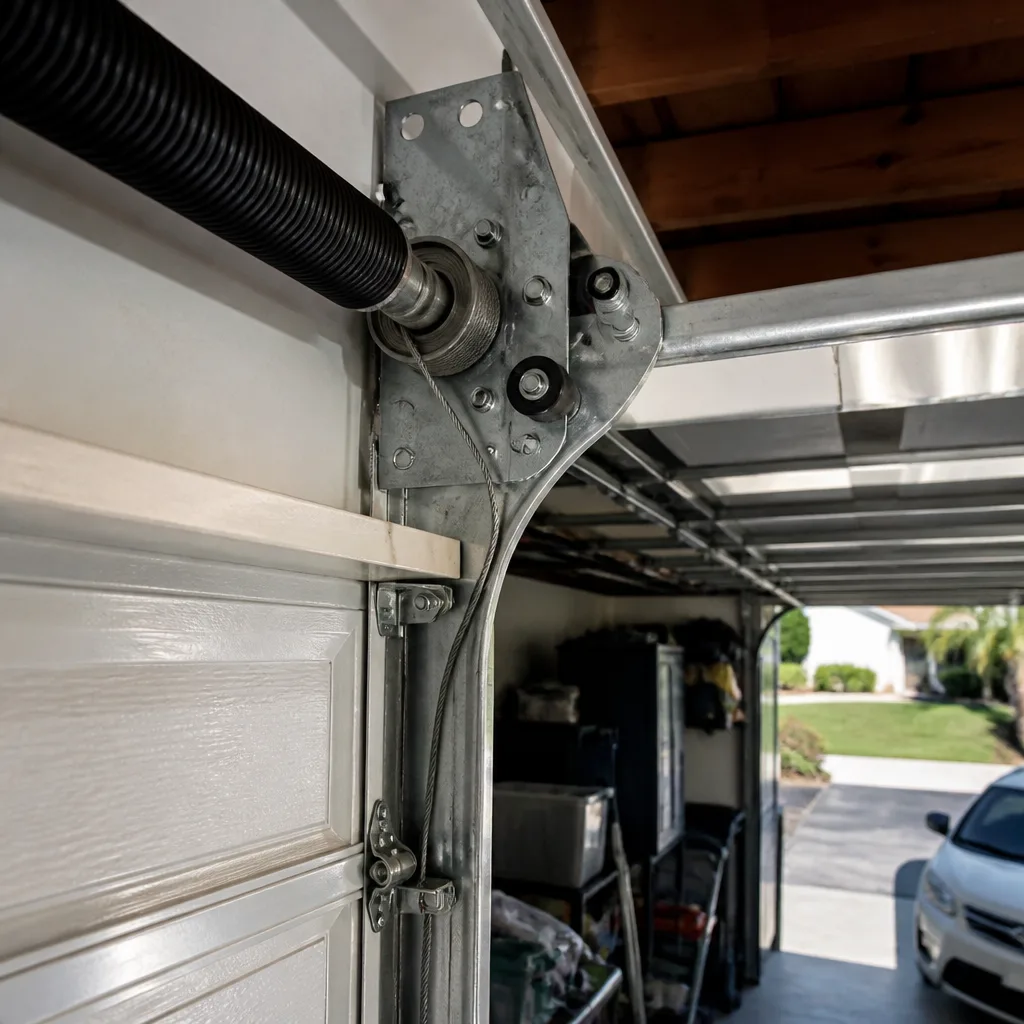
Use a silicone-based or lithium-based garage door lubricant, not WD-40. WD-40 is a solvent and will strip existing lubrication. Spray the rollers, hinges, the torsion spring (the thick coiled spring mounted above the door that bears most of the lifting load), and the arm that connects the door to the opener. Wipe off the excess. If the door sounds quieter immediately after lubricating, you waited too long.
Hardware Inspection
Walk the track line with a flashlight. Look for loose bolts, especially at the brackets that hold the track to the wall. Check the hinges for play. Check the cables for fraying. None of these things make noise until they fail, and by the time you hear grinding or see a sagging track, the fix has gone from a $10 bolt to a structural repair.
In our experience, roughly one in four homes in Fort Lauderdale has at least one loose track bolt at any given time. The vibrations from daily use, combined with the expansion and contraction from temperature swings, work bolts loose over time. Ten minutes of checking saves a lot.
Pre-Hurricane Season Checklist: The April 30 Deadline
If you do one thing from this entire guide, do this. Pick a Saturday in April and complete this checklist before May 1. Hurricane season officially starts June 1, but the first named storms of the Atlantic season often form in May, and you don’t want to be scrambling for parts when the supply houses are swamped.
- Test the door’s balance. Disconnect the opener (pull the red release handle) and manually lift the door halfway. A balanced door stays in place. If it falls or rises on its own, the springs are wearing out. An unbalanced door puts extra strain on the opener and makes wind-driven door movement more likely during a storm.
- Inspect the bracing and struts. Most modern Fort Lauderdale garage doors have horizontal steel struts bolted across each panel to resist wind load. Look for rust at the strut mounting points and any signs the bolts have loosened. A strut that’s come loose doesn’t protect the door when wind pressure hits.
- Verify the track anchors. Confirm that the vertical tracks are bolted into the wall framing, not just the drywall. Under wind load, a track that’s anchored into drywall can pull free, and the door comes with it.
- Check weatherstripping one more time. April is your last dry-season chance to replace damaged seals before the rain arrives. Do not skip this.
- Test the opener’s force settings. The opener should reverse when it meets resistance. This matters during storm season because if debris lands on the door or the wind pushes against it, the opener needs to stop rather than force the door and strip a gear or bend a panel.
- Know how to operate the door manually. If you lose power during a storm, you need to know where the red release handle is and how to open and close the door by hand. In the middle of a storm is not the time to figure that out.
Broward County’s wind-load requirements mean your door should be rated for the specific wind zone your home sits in. If you bought the house and don’t know what’s installed, a Garage Door Repair in Fort Lauderdale technician can identify the door model, confirm the wind rating, and tell you whether the bracing meets current code.
Rainy-Season Monitoring: June Through October
This is the phase most homeowners skip, and it’s the phase that does the most damage. From June through October, Fort Lauderdale gets daily afternoon thunderstorms, and the garage door is the first line of defense against water intrusion.
Drainage at the Threshold
Stand outside your garage door during a heavy rain and look at where the water goes. If water pools against the bottom of the door, even for a few minutes, it’s working its way under the seal. Over time, that constant wetting causes the bottom seal to compress permanently, and then the gap widens, and then you have a puddle inside the garage.
The fix depends on the cause. Sometimes it’s a simple seal replacement. Sometimes the concrete apron has settled and the threshold needs a drainage channel cut or a threshold seal installed. If you’re seeing water inside the garage after rain, that’s a problem worth addressing before it becomes a drywall or flooring issue.
Track Rust and Standing Water
Garage door tracks in Fort Lauderdale rust from the inside out. The vertical tracks sit close to the ground, and if water splashes onto them regularly, rust forms at the bolt holes and spreads. You won’t necessarily see it because the roller is covering the worst of it.
Check the track by running your finger (carefully) along the inside edge, near the bottom. If it feels rough, that’s the beginning of corrosion. Light surface rust can sometimes be cleaned, but deep rust compromises the track’s integrity, and the roller can bind. A bound roller puts lateral stress on the track, the hinges, and eventually the door panel itself.
Bottom Seal Compression
The bottom seal (also called the astragal) is the rubber strip that runs along the bottom of the door and compresses against the threshold. During the rainy season, water tests this seal daily. If the seal is old or has lost its shape, water will find the path of least resistance.
Test the compression by closing the door and shining a flashlight from the inside along the threshold line. If you see light through a gap, water can get through the same gap. Replace the seal before the heaviest part of the season hits.
This is also the season when we get the most calls about Garage Door Cable Repair in Fort Lauderdale. Cables absorb moisture, they rust, and when a rusty cable meets the daily tension of an operating door, it eventually lets go. If your cables look rusty or frayed, call for service before they snap, because when a cable fails, the door can come down hard and unevenly.
Post-Storm Inspection Protocol
After any named storm passes, run this inspection before you operate the door. This applies even if the storm didn’t make a direct hit and even if the door looks fine. Wind-driven rain and pressure changes can cause damage that isn’t visible from the driveway.
- Visual check from inside. Before touching anything, look at the door from inside the garage. Check the track alignment, the spring, and the cables. Look for anything out of place.
- Check the track for debris. Wind can blow leaves, branches, and debris into the track channel. If something is lodged in there and you open the door, it can bind and bend the track.
- Check the balance again. Do the same manual balance test from your April checklist. Storm pressure can shift the door on its tracks, and a door that was balanced in April may not be balanced now.
- Check for water intrusion. Look at the bottom seal, the threshold, and the corners of the door. If water came in during the storm, address it now, not next month.
- Operate the door once, slowly. Open it halfway and listen. Any grinding, scraping, or binding is a sign that something’s wrong. Stop and investigate.
If the door was damaged or you suspect spring damage, do not attempt to operate it. A torsion spring under tension stores enough energy to cause serious injury if it releases improperly. Call a professional.
The Annual Documentation Habit
Here’s a habit that costs nothing and pays off every single time: photograph your garage door system once a year, and file the photos somewhere you’ll actually find them.
What to photograph:
- The torsion spring (get the spring’s paint stripe or color code in the frame)
- The cables at both connection points
- The bottom seal, close up
- The weatherstripping along both jambs and the header
- The track on both sides, including the mounting brackets
- The opener unit, including the model number label
- The door panels, especially corners and edges
Why this matters: when you file a warranty claim or an insurance claim, the first question is always “what condition was it in before?” If you have photographs from before the failure, you have documentation. If you don’t, you’re relying on the adjuster’s opinion. This is especially important in Fort Lauderdale, where storm-related garage door claims are common and insurance companies scrutinize every one of them.
Do this every November. It takes ten minutes. File the photos in a folder on your phone or computer labeled with the year. When something fails in July, you’ll have the November baseline to compare against, and that documentation often makes the difference between a covered claim and a denied one.
What Seasonal Maintenance Costs in Fort Lauderdale
Here’s a realistic picture of what you’ll spend on garage door maintenance in the Fort Lauderdale market:
- Bottom seal replacement: $90 to $180, depending on door width and seal type
- Weatherstripping replacement (full perimeter): $75 to $160
- Torsion spring replacement (single spring): $180 to $340, depending on spring size and cycle rating
- Cable replacement (both cables): $150 to $275, depending on cable type and drum condition
- Full tune-up and safety check: $99 to $150, which includes lubrication, hardware tightening, balance test, and safety reversal check
- Opener replacement (with installation): $350 to $600, depending on horsepower and drive type
These are ranges, not quotes. Your actual cost depends on your door’s size, age, and condition. What matters is that the price you’re quoted is the price you pay. At Brock Garage Doors Fort Lauderdale home services, every job gets a written price before any work starts, so the number you approve is the number on the invoice. That’s the way it should work, and if you’ve been quoted a number and then hit with a different one at the door, you know why that matters.
If your door hasn’t been inspected in a while, a good starting point is a Garage Door Repair in Fort Lauderdale tune-up. We’ll inspect everything, tell you what’s actually wrong (and what’s not), and hand you a written price for any recommended repairs before we touch anything. If the door’s opener is acting up, Garage Door Opener Repair in Fort Lauderdale covers everything from Chamberlain and Genie to LiftMaster, Clopay, and Amarr systems.
Common Mistakes to Avoid
- Following a northern-season maintenance calendar. Fort Lauderdale doesn’t have a “winterization” phase, and checking your door in October as if fall were coming misses the fact that October is precisely when corrosion from the rainy season peaks.
- Lubricating on the northern schedule (twice a year). Our humidity demands quarterly lubrication. Twice a year means unprotected metal for months at a time.
- Ignoring a bottom seal until water actually enters the garage. By the time you see a puddle, the seal has been failing silently for weeks or months, and the water may have already reached your drywall or stored items.
- Skipping the post-storm inspection if the door “looks fine.” Wind-driven debris can lodge in the track or knock the door out of balance without leaving visible external damage.
- Using WD-40 or a generic spray lubricant. These products clean but don’t properly lubricate garage door components, and they can break down the grease that’s already protecting the metal.
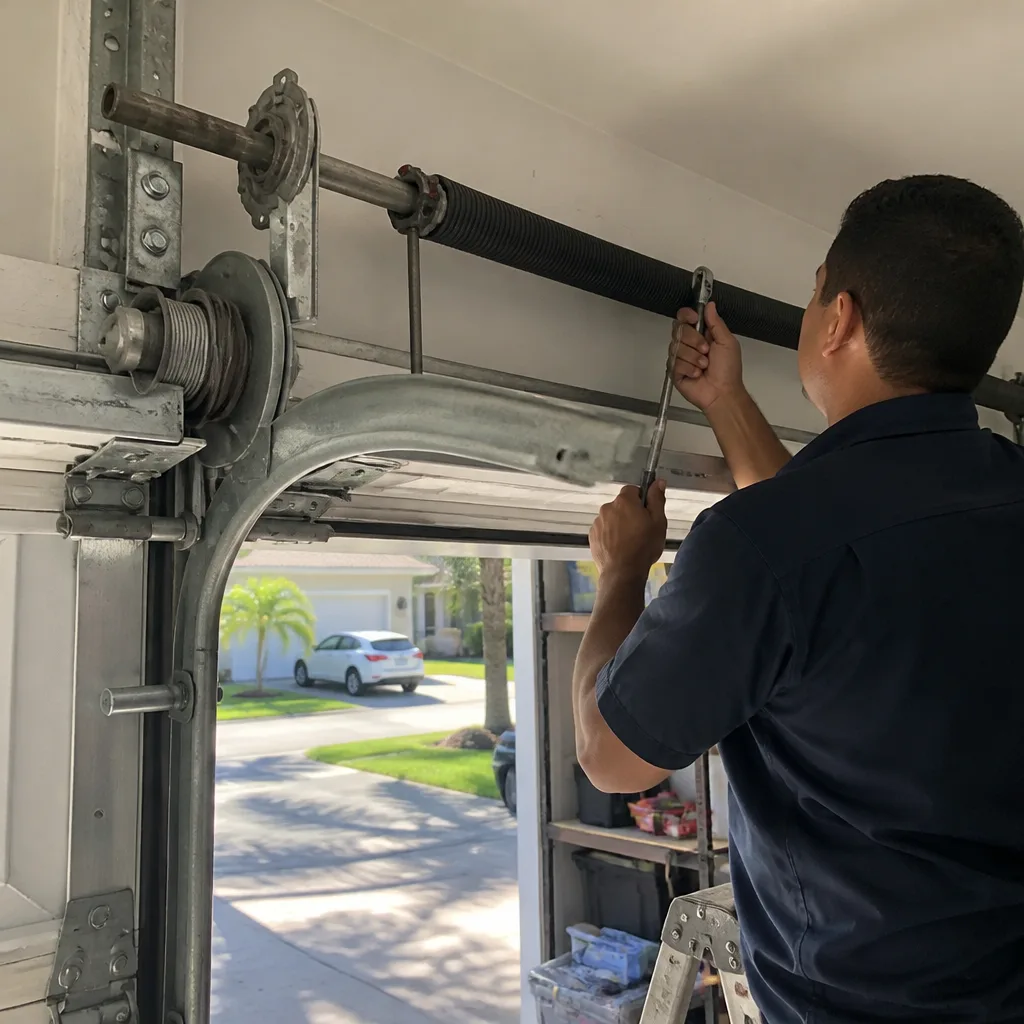
- Attempting to replace a torsion spring yourself. Torsion springs hold an enormous amount of tension, and a mistake during replacement can cause severe injury. This is a job for a trained professional with the right tools.
- Not documenting the door’s condition annually. Without baseline photographs, warranty and insurance claims become he-said-she-said arguments, and you usually lose.
See the difference
 Before
 After
After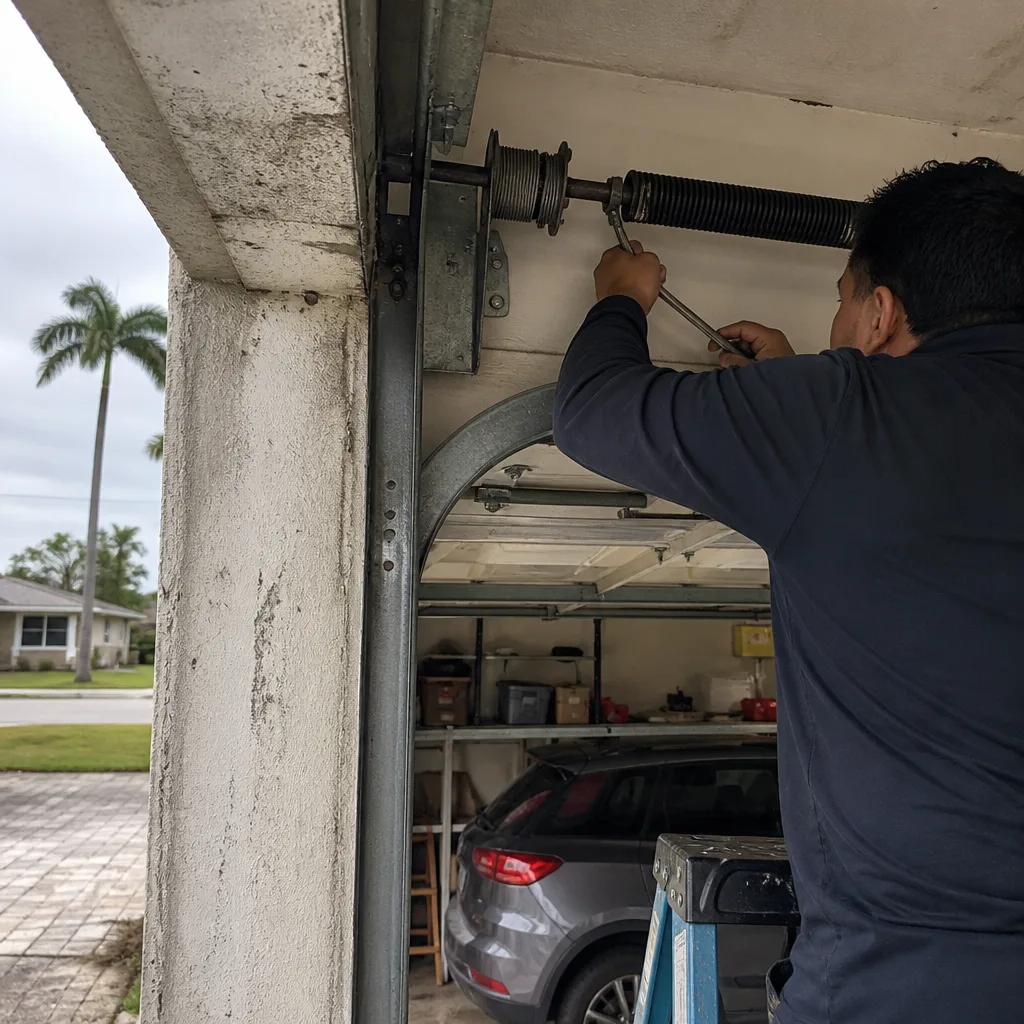 Before
 After
After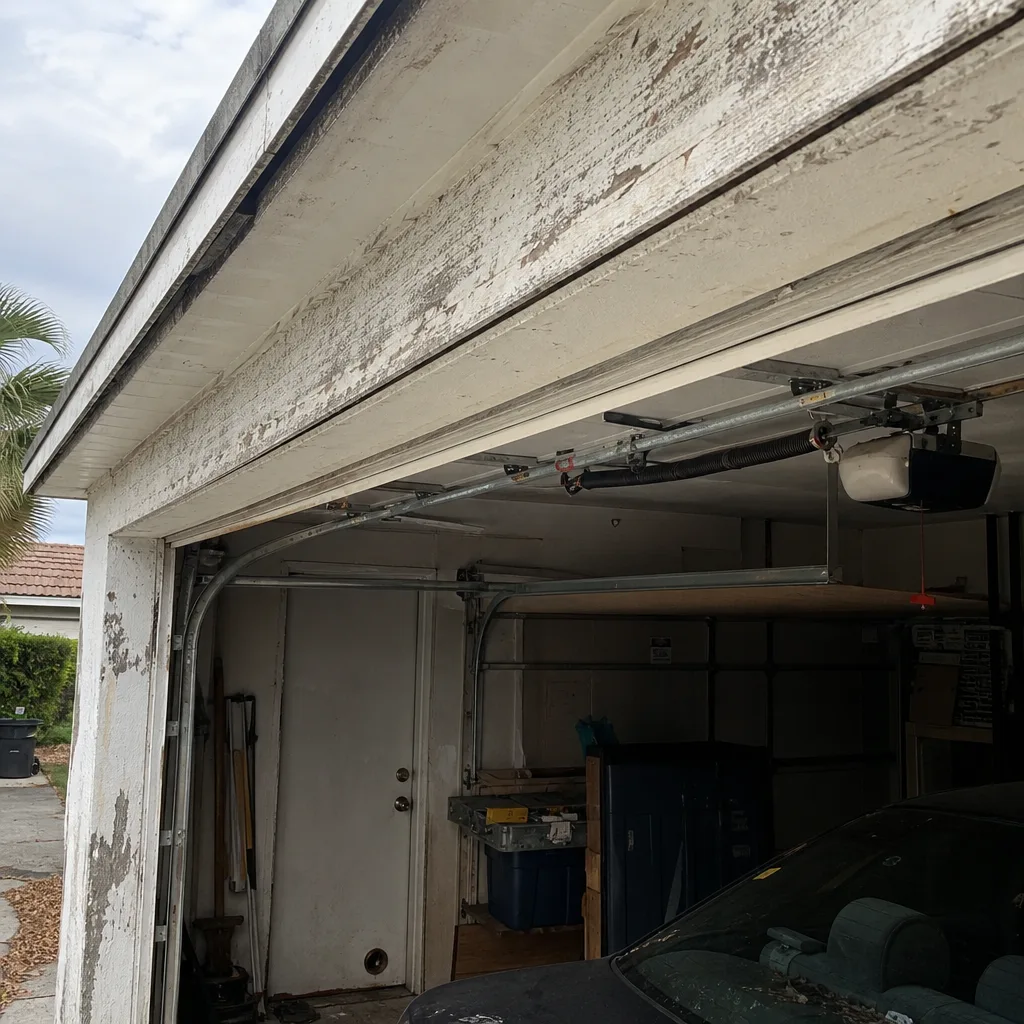 Before
 After
AfterWhen to Call a Professional
Call a professional if you hear grinding or scraping during operation, if the door doesn’t open or close evenly, if the cables look frayed or rusted, if the spring is visibly broken or stretched, or if water is entering the garage after rain despite a new bottom seal. Call if you’ve just moved into a Fort Lauderdale home and don’t know the door’s maintenance history or wind rating. And call immediately if the door comes off its track or the spring snaps, because operating a door in either condition is dangerous.
Brock Garage Doors Fort Lauderdale offers free estimates in Fort Lauderdale, and you’ll get a written price before any work begins. Call (754) 354-7491.
Frequently Asked Questions
A full professional inspection and tune-up once a year is the minimum for Fort Lauderdale’s climate, but you should do basic checks yourself at three points: November (seal replacement and documentation), April (pre-hurricane checklist), and monthly during the rainy season. If your door gets heavy daily use, consider a professional tune-up every six months, because salt air and humidity accelerate wear on hardware and cables. Call (754) 354-7491 to schedule a tune-up and get a written quote before work starts.
Expect to pay $99 to $150 for a professional tune-up, $90 to $180 for bottom seal replacement, and $180 to $340 for torsion spring replacement. These are typical Fort Lauderdale market ranges. Exact pricing depends on your door’s size and condition. At Brock Garage Doors Fort Lauderdale, the written quote you approve is the price you pay, and estimates are free. Call (754) 354-7491 for an exact number on your specific door.
Yes, most homes in Broward County require garage doors that meet specific wind-load standards, and many doors need horizontal reinforcement struts. Building code requirements depend on your home’s wind zone and when it was built. If you’re unsure whether your door is compliant, a professional can identify the model, confirm the wind rating, and tell you what’s required. Call (754) 354-7491 for an inspection and a written recommendation.
Humidity and salt air are the main culprits. Fort Lauderdale’s coastal moisture means metal components, especially tracks, cables, and hinges, corrode faster than they would inland. The rust often starts at the bottom of the tracks where splash-back from rain reaches the metal. Quarterly lubrication and prompt attention to any surface rust are the best defenses. If rust is already deep, call (754) 354-7491 to have a technician assess whether the track needs replacement.
No, do not attempt this. Torsion springs are wound under extreme tension and can cause serious injury or death if they release while you’re working on them. Springs are also specific to the door’s weight and cycle rating, so installing the wrong spring creates a safety hazard. This is a job for a trained professional with the right winding tools and experience. Brock Garage Doors Fort Lauderdale technicians are trained on Chamberlain, Genie, Clopay, and Amarr systems, and every spring replacement comes with a written 365-day guarantee. Call (754) 354-7491 for service.
Anything involving the torsion spring, cables, track alignment, or the door’s balance is a professional job, period. You can safely handle lubricating hinges and rollers, replacing a bottom seal, tightening loose bolts that are easily accessible, and running visual checks. If you’re ever unsure, call and describe what you’re seeing. A live person answers at Brock Garage Doors Fort Lauderdale 24 hours a day, and we’ll tell you honestly whether it’s a DIY fix or a service call. Call (754) 354-7491.
The Bottom Line
Fort Lauderdale garage doors fail on a schedule set by humidity, wind, and rain, not by a calendar written for somewhere else. Dry-season seal replacement, April hurricane prep, and rainy-season monitoring are the three checkpoints that prevent most expensive failures. Keep the hardware lubricated quarterly, photograph everything annually, and know when a job is too dangerous to attempt yourself. If you do those things, your door will outlast most of your neighbors’ doors, and you’ll spend a fraction of what they spend on repairs. If you’re ready to get your door checked before the next phase hits, Brock Garage Doors Fort Lauderdale serves the Fort Lauderdale area with free estimates and written pricing. You can also browse more guides & resources on keeping your door running smoothly year-round. Call (754) 354-7491 and we’ll be there.
Written by Wade Mercer, Owner at Brock Garage Doors Fort Lauderdale, serving Fort Lauderdale since 2001.