
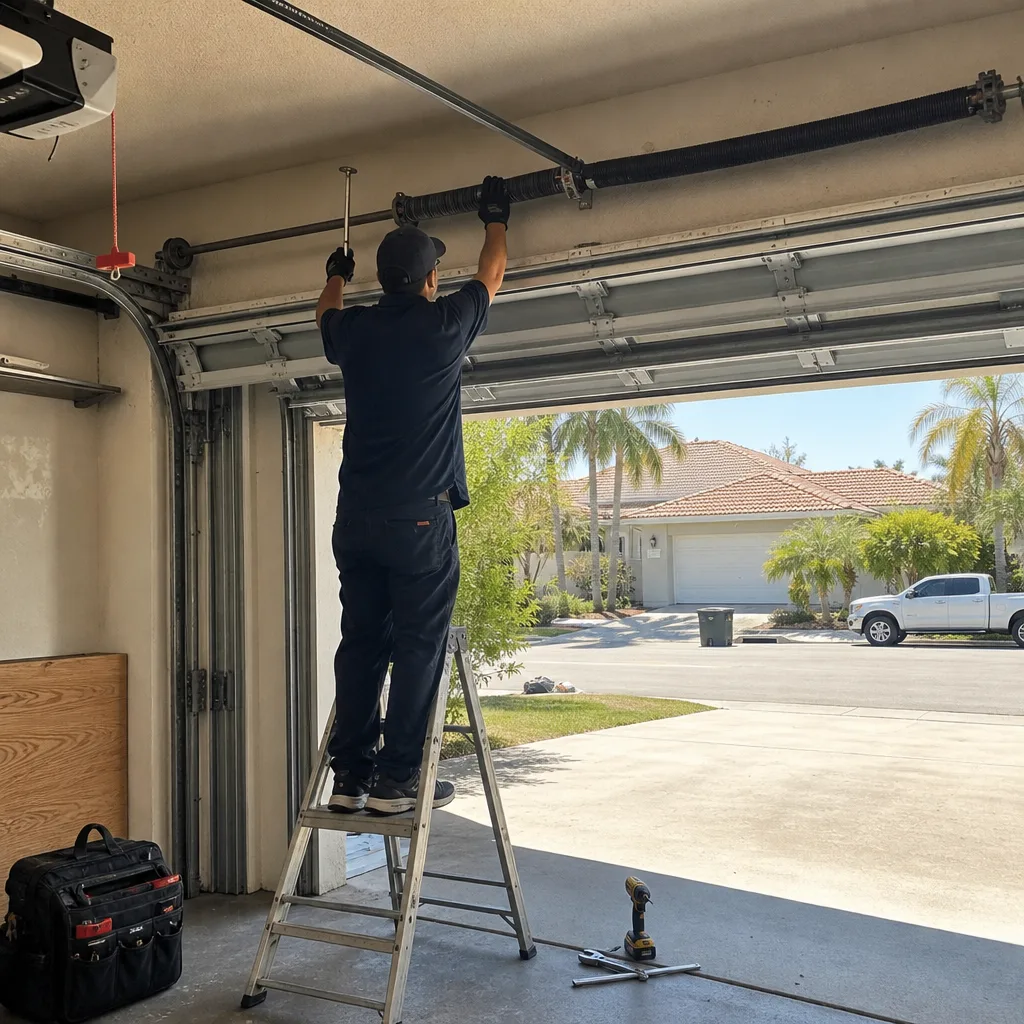
Last updated October 16, 2026
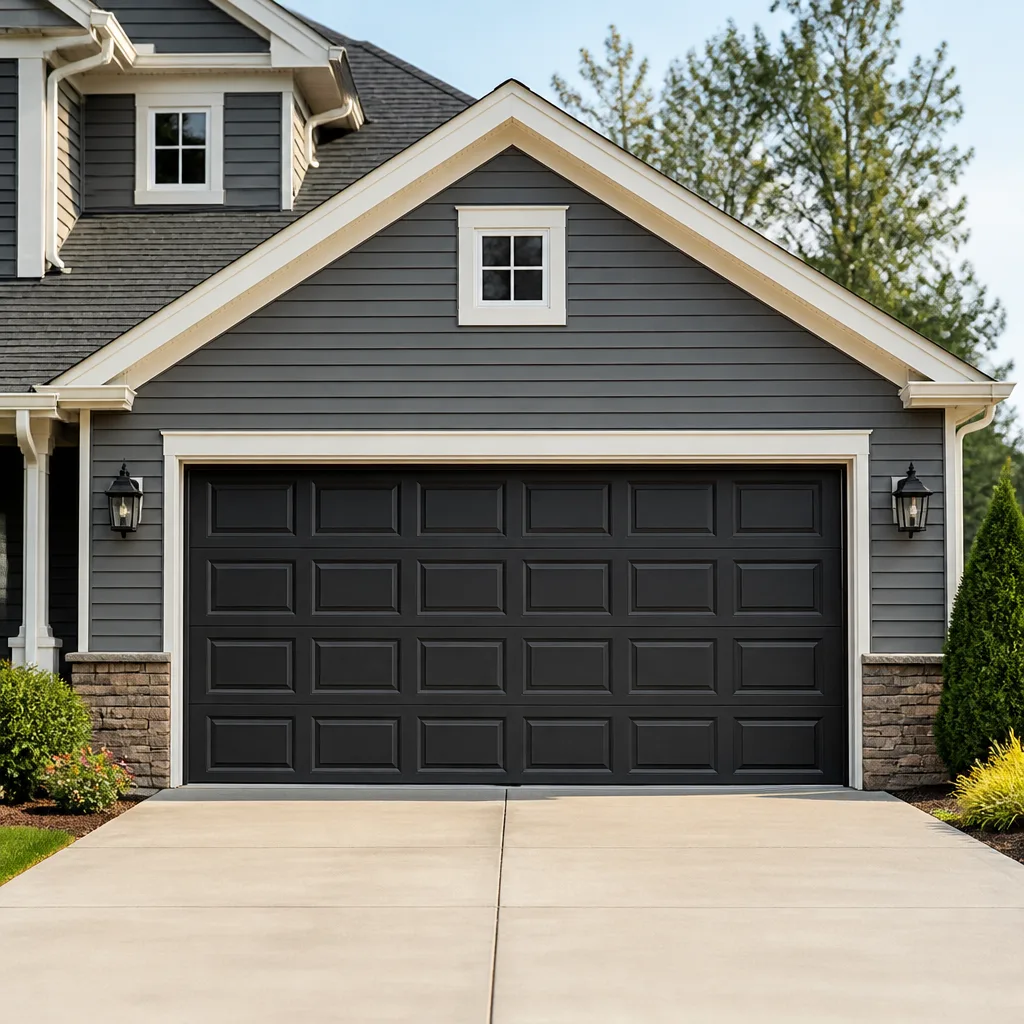 Raised-panel steel
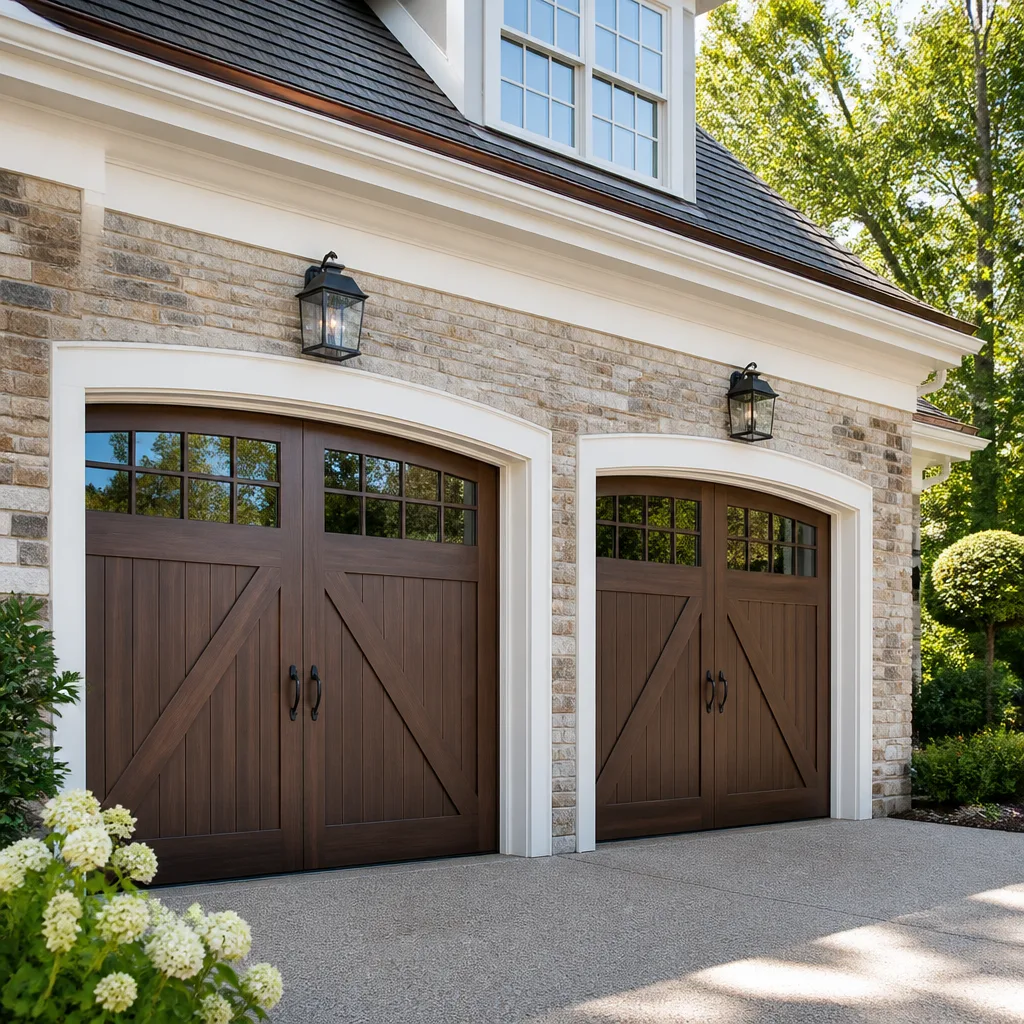 Carriage house
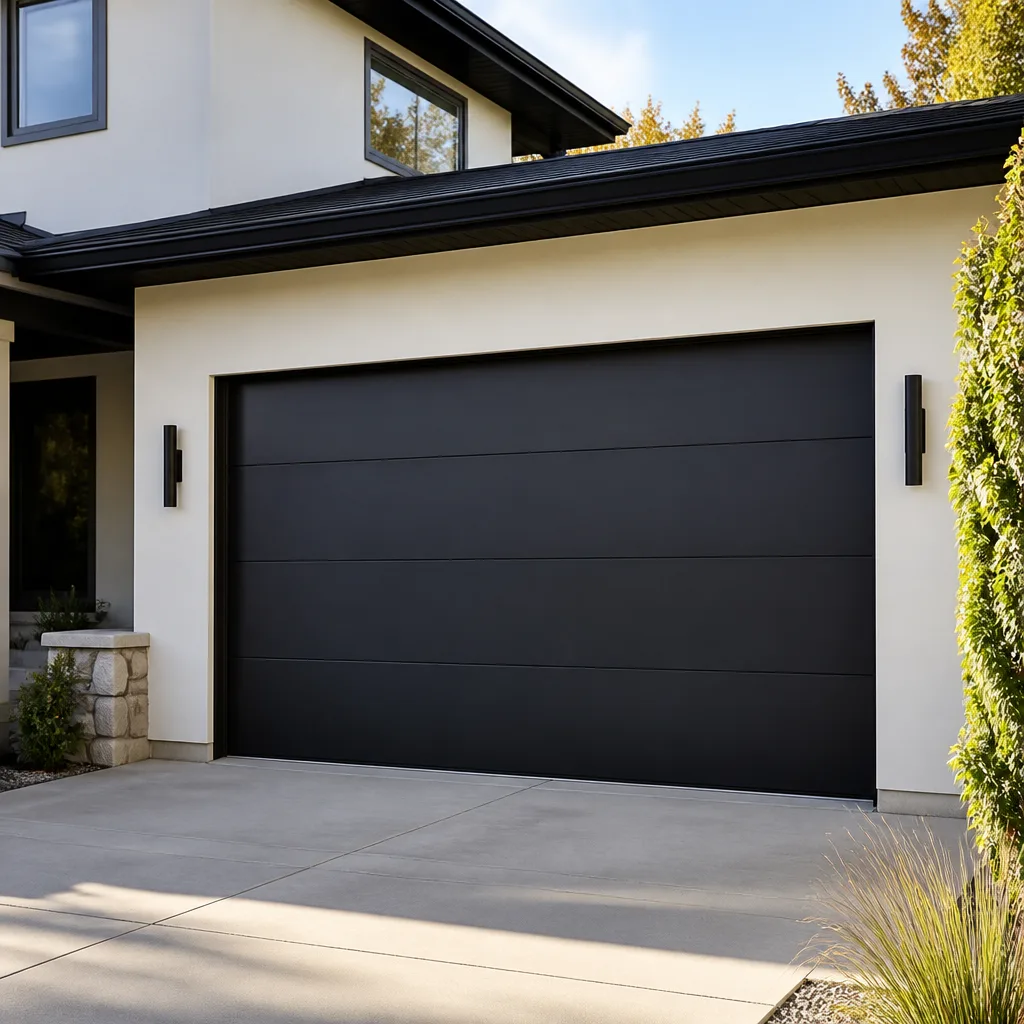 Modern flush
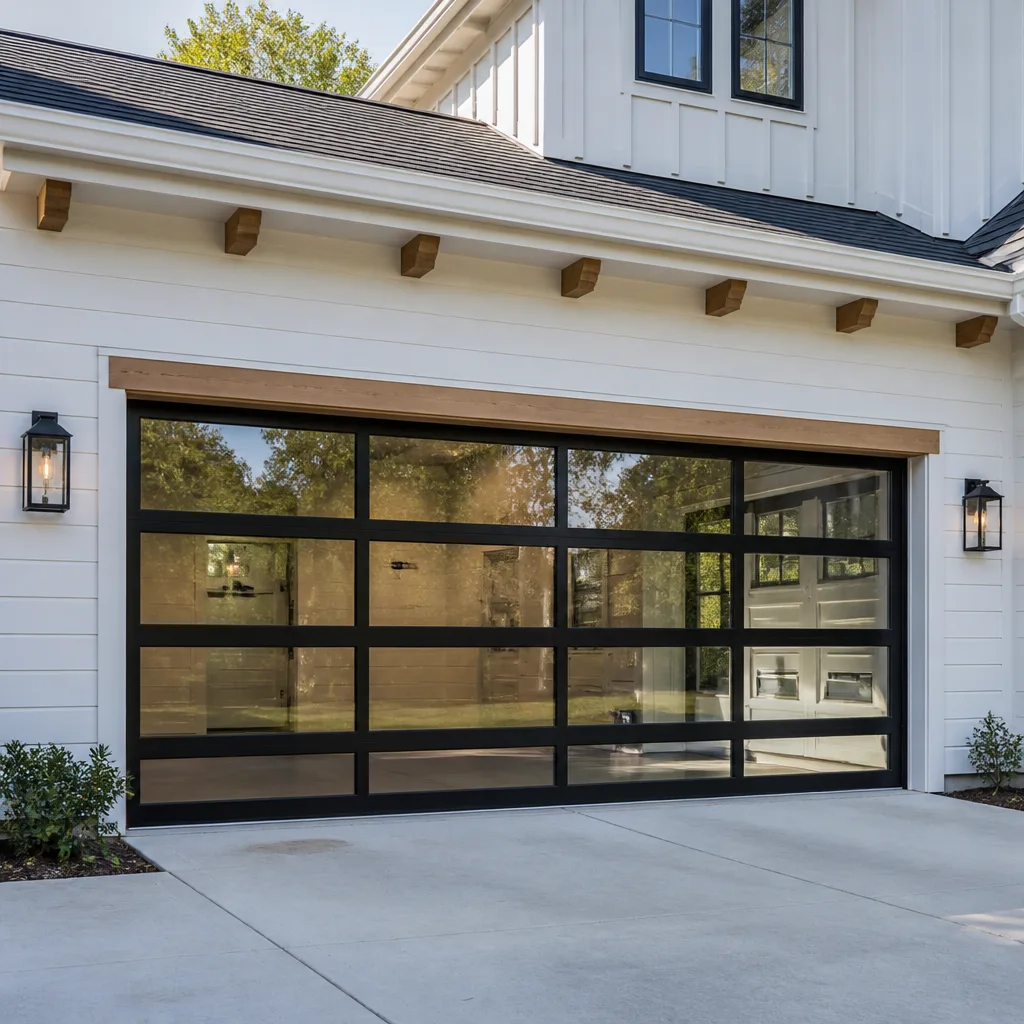 Full-view glass
 LiftMaster openers
 Chamberlain openers
Full 25-point door and opener safety check with every visit - springs, cables, rollers, tracks, and your LiftMaster or Chamberlain opener included
You get a price before we start. It does not change when the truck arrives.
Get your free estimateGarage Door Warning Signs: A Fort Lauderdale Homeowner’s Reference Guide
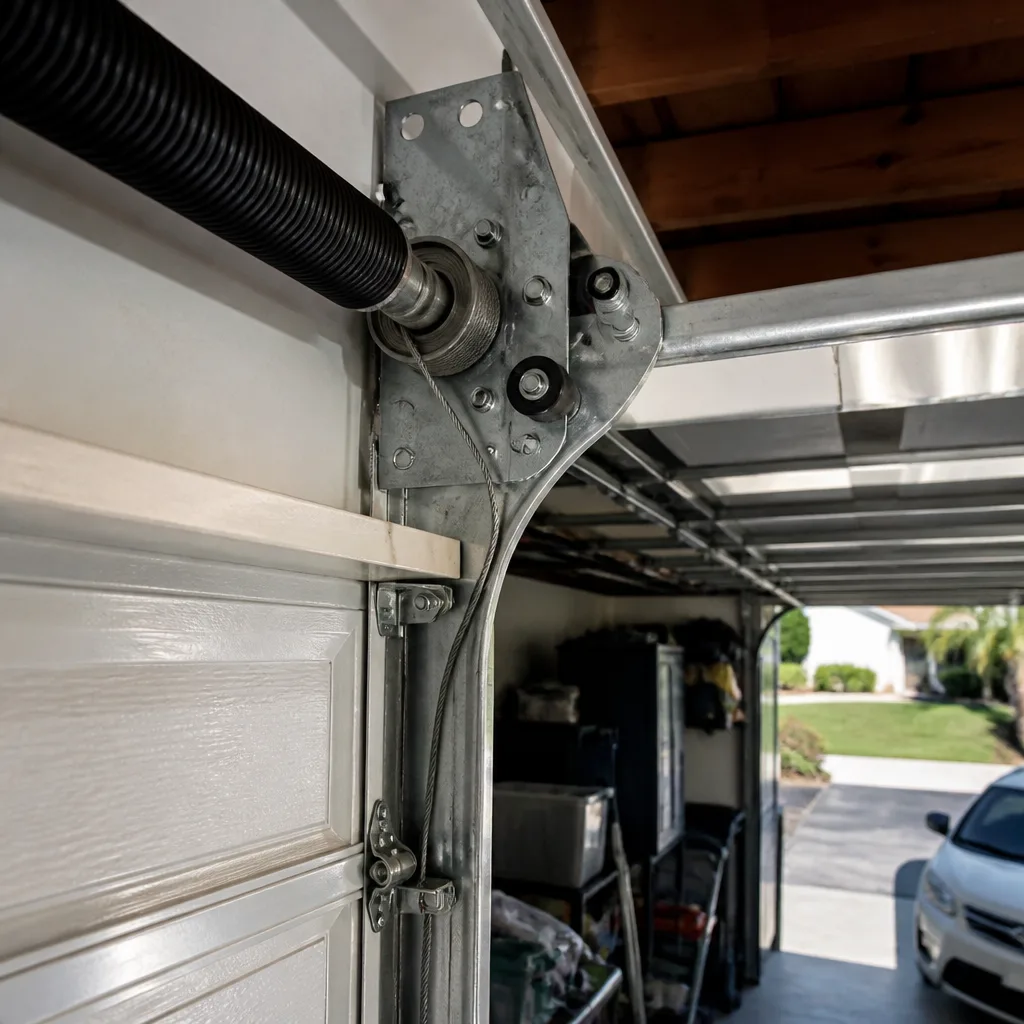
Here’s the detail most homeowners miss: a garage door that takes three seconds longer to open than it did six months ago is already telling you the springs are losing tension. Most people interpret that slowdown as “the opener needs new batteries.” It doesn’t. What it means is that the torsion spring, the thick coiled component above the door that bears most of the lifting load, is approaching the end of its service life. In Fort Lauderdale, where salt air and humidity accelerate wear on every metal component, that subtle slowdown shows up earlier than it does inland. This guide teaches you to read the door before it fails, so you’re scheduling a repair on your terms instead of reacting to a breakdown at the worst possible moment. For The Complete Guide to Garage Door in Fort Lauderdale, see our overview.
Quick Answer
The earliest garage door warning signs in Fort Lauderdale are slow, uneven movement, visible corrosion on springs and tracks, and a door that won’t hold position when released manually. For year-round maintenance advice, read our Seasonal Garage Door Care for Fort Lauderdale: Year-Round Homeowner’s Guide. These symptoms indicate deteriorating springs, rollers, or cables and typically precede a full failure by weeks or months. Catching them early means a $150 to $300 spring or roller repair instead of a $400 to $700 emergency replacement after a cable snaps and the door slams shut.
Styles & brands we work with
Table of Contents
- The Balance Test: What Your Door Is Trying to Tell You
- Reading Corrosion: Surface Rust vs. Structural Rust in South Florida
- Sound Diagnosis: Scraping, Grinding, and Rhythmic Thumps
- Panel Gap Irregularities: When a Door That Looks Fine Isn’t
- Same-Day Emergency vs. Scheduled Repair: How to Decide
- Cable Warning Signs: The Most Dangerous Failure You Can Prevent
- Opener Warning Signs: Motor Strain and What It Means
- Common Mistakes to Avoid
- When to Call a Professional
- Frequently Asked Questions
The Balance Test: What Your Door Is Trying to Tell You
A properly balanced garage door should hold its position at the halfway point when disconnected from the opener. If it drifts down or slams shut, the springs are losing tension. If it creeps upward, someone has over-adjusted them, usually after a previous repair. Either condition means the door is fighting itself on every cycle, and that fight is wearing out the opener motor, the cables, and the hinges at an accelerated rate.
Here’s how to perform the balance test safely in under two minutes:
- Close the door completely.
- Pull the red emergency release handle. This disconnects the door from the opener carriage. The door is now under spring tension only. Keep your body to the side of the door, never directly under it.
- Lift the door manually to the halfway point. It should stay there without assistance.
- Release it carefully. A door that stays put is balanced. One that drops is under-sprung. One that rises is over-sprung.
- Reconnect the door to the opener by pulling the release handle toward the door and running the opener until it re-engages.
In Fort Lauderdale, we test balance on nearly every service call, and the results are consistent: doors within three miles of the Intracoastal show spring fatigue noticeably sooner than doors in neighborhoods like Plantation or Davie. The salt-laden air doesn’t rust the spring overnight, but it does accelerate the micro-fractures in the spring steel that eventually lead to a snap. If your door fails the balance test, the springs need attention before they fail outright. One spring replacement on a double door typically runs $220 to $380, depending on spring size and cycle rating. Waiting until the spring snaps means the door can come down hard, and that’s when cables break, panels bend, and people get hurt.
Reading Corrosion: Surface Rust vs. Structural Rust in South Florida
Not all rust is a problem. Some rust is a coating issue, cosmetic and easily addressed. Other rust is structural, and it means the component is no longer doing its job. In Fort Lauderdale’s coastal environment, the difference matters because both types appear on every door eventually.
Surface rust shows up as an orange-brown discoloration on the track, the bottom panel, or the hardware brackets. It looks bad but usually doesn’t affect function. Surface rust can be cleaned with a wire brush and treated with a rust converter, then painted. The component underneath remains sound.
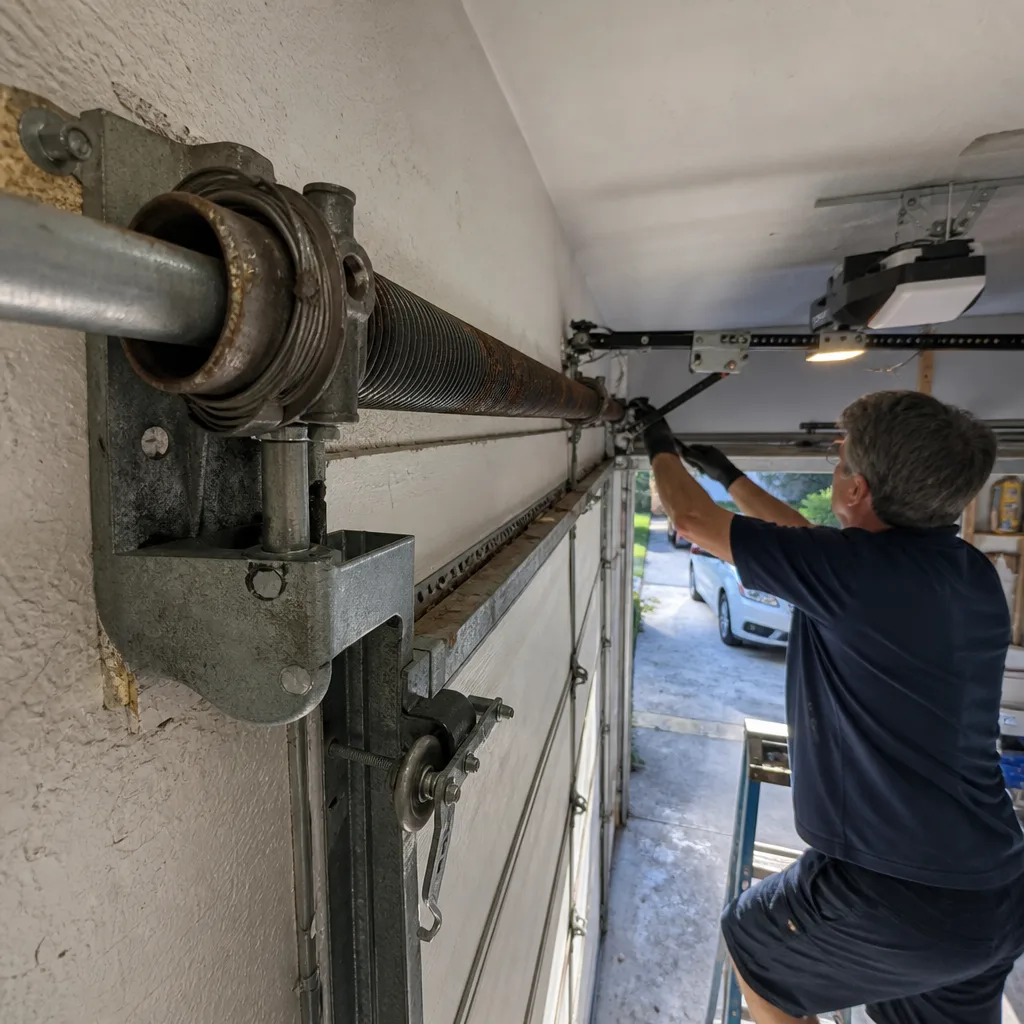
Structural rust is different. Look for pitting, flaking, or thin spots where the metal has been eaten through. On a torsion spring, structural rust appears as rough patches or pits on the coil surface. That’s not cosmetic. A pitted spring is a spring that has lost material, and lost material means lost lifting capacity. The spring will fail. The only question is when.
Here’s what to check on a quarterly walk-around:
- Rollers: If the roller stems are rusted, they will bind in the hinges. The door gets jerky, and the opener works harder. Worn rollers with rusted bearings produce a distinctive rattle and should be replaced. Nylon rollers with sealed bearings hold up better in humid climates than steel rollers, and the upgrade typically costs $15 to $25 per roller installed.
- Tracks: Rust on the vertical track surfaces is usually surface-level. But check the track brackets where they fasten to the wall. If the bracket itself is corroded, it can pull loose under load, and a detached track is a door that jumps its rollers.
- Cables: Garage door cables are galvanized for corrosion resistance, but in Fort Lauderdale the galvanizing wears through over time. If you see fraying, discolored strands, or rust blooming along the cable, that cable is near failure. A cable replacement runs $150 to $275 depending on cable type and drum condition. A snapped cable under tension can cause serious injury, which is why we never recommend handling cables yourself.
- Springs: Rust on a spring, especially pitting, is a replacement indicator, not a repair item. Springs are not coated in a way that tolerates rust. Once the material is compromised, the spring is done.
We’ve worked on doors in Rio Vista and Coral Ridge where the hardware was so corroded the hinge bolts snapped during removal. That’s the extreme end, but it starts with surface rust that gets ignored for three or four years. If you live within two miles of the ocean, inspect quarterly. The salt air in Fort Lauderdale is relentless, and it does not take a season off.
Sound Diagnosis: Scraping, Grinding, and Rhythmic Thumps
Garage doors are not quiet machines, but they are consistent machines. A change in sound is a diagnostic clue, and different noises point to different problems. Learning to distinguish them can save you from a misdiagnosis that turns a $90 roller replacement into a $350 opener repair.
A scraping sound is metal dragging on metal. The usual culprit is a track that has come out of alignment or a roller that has lost its bearings and is skidding instead of rolling. Scraping that occurs only at a specific point in the travel cycle points to a bend or obstruction in the track at that point. Scraping throughout the cycle points to worn rollers, especially if the sound has a metallic edge. In Fort Lauderdale, track misalignment often follows a storm or a vehicle bump against the track, which is common in tight garages in neighborhoods like Victoria Park.
A grinding sound is different. Grinding indicates a component under load that is failing to rotate freely. On a chain-drive opener, a grinding noise from the motor unit points to a failing gear or sprocket. On the door itself, grinding often comes from the torsion spring system when the spring is binding against the center bearing or the spring anchor bracket. A grinding spring system is a red flag: the spring is not operating evenly, and uneven load is exactly what causes a spring to snap.
A rhythmic thump that repeats with each rotation of the opener chain or belt is usually a chain that has stretched and is slapping the rail, or a trolley that has come loose. On Genie and LiftMaster openers, a thump at the start or end of the cycle can also indicate a worn sprocket or a loose belt tensioner. A rhythmic thump from the door itself, especially on a wooden door like those common in older Fort Lauderdale homes, points to a delaminating panel or a hinge that has loosened and is allowing the panel to shift.
One diagnostic rule we use in the field: if the sound repeats on a cycle (every time the door moves), it is a rotating component. If it happens at a specific point, it is a position-specific component like a track section or a panel joint. That distinction narrows the diagnosis by half before we even open the door.
Panel Gap Irregularities: When a Door That Looks Fine Isn’t
A door that “looks fine” from the street can still be failing at the joints. Panel gap irregularities are one of the most overlooked warning signs because they don’t announce themselves with noise or dramatic movement. They show up as a slight increase in the space between two panels, or a panel that sits proud of its neighbor by an eighth of an inch, or a door that bows slightly in the middle when closed.
What all of these indicate is hinge failure or bracket stress. Sectional garage doors are not solid slabs. They are four or five panels connected by hinges and roller brackets, and every panel joint is a flex point. When the door is balanced properly, the force at each joint is even. When a spring starts to lose tension on one side, or when a cable stretches, the load shifts. One hinge takes more weight than it was designed for. That hinge begins to wear oblong around the pivot pin. The gap between the panels opens up slightly. The door still works, so nobody notices.
Then the hinge breaks, and the panel it was supporting drops, and the door jams halfway up at 6:45 on a Monday morning.
Inspecting panel gaps is simple, and it’s something we recommend Fort Lauderdale homeowners do every time they wash the car or pull the bins out. Look at the door closed from the inside. The gaps between panels should be consistent from left to right. Use a flashlight at night and look for light coming through any joint that didn’t show light before. If you see a gap that’s wider on one side than the other, or if the door has a visible bow when closed, the hinges or the spring system need attention. Hinge replacement is a $75 to $150 repair for most doors. The panel damage that follows an untreated hinge failure can be $400 to $800, because bent panels rarely straighten.
On Clopay and Amarr doors, which are common in Fort Lauderdale’s newer communities, hinge geometry is specific. Using a generic hinge from a hardware store on these doors changes the pivot point by a few millimeters and accelerates the next failure. It is one of the reasons we stock manufacturer-specific hardware on every truck.
Same-Day Emergency vs. Scheduled Repair: How to Decide
Not every warning sign requires a truck tonight. Some do. Knowing the difference saves you money, because emergency service rates are higher than scheduled rates, and paying a premium for a problem that could safely wait until Tuesday is money wasted. Here’s the framework we use when a Fort Lauderdale homeowner calls and asks whether they need us now or can wait.
Same-day is warranted when:
- The door will not close at all. An open garage is an invitation, and in many Fort Lauderdale neighborhoods an open garage full of tools, bikes, and fishing gear is a visible target.
- The door will not open and the car is inside. You have places to be. That’s an emergency by definition.
- A cable has snapped and the door is hanging unevenly. A door hanging on one cable is dangerous. Do not operate it. Do not stand under it. Call us and we’ll come out. Cable repairs in Fort Lauderdale run $150 to $275 in most cases.
- The spring has snapped and the door will not lift even manually. A broken spring means the full weight of the door, which is typically 150 to 250 pounds, is unsupported. Do not attempt to force it open.
- You hear a grinding noise that is getting worse with each cycle. That’s a component failing under load, and the failure is imminent.
Scheduled repair is appropriate when:
- The door is slow but still operating. A sluggish door points to spring fatigue, and that repair can wait a day or two.
- You notice surface rust on the track or bottom panel. Cosmetic. Schedule it at your convenience.
- The opener is making an occasional thump or the remote range is shrinking. These are early-stage opener issues. Garage Door Opener Repair in Fort Lauderdale can typically be scheduled within a few days.
- The door shudders at a particular point in its travel. That’s usually a track or roller issue that can be addressed on a scheduled visit.
The safety logic behind this distinction is straightforward: anything that compromises structural support (springs, cables) or leaves the garage unsecured is an emergency. Anything that degrades performance but keeps the door functional is a scheduling matter.
Cable Warning Signs: The Most Dangerous Failure You Can Prevent
Garage door cables do not fail without warning. They fray, they rust, they stretch, and they kink. The failure at the end is dramatic, but the lead-up is visible for weeks. This matters because cables are under enormous tension, the same tension that holds the door up, and when a cable lets go, the released energy is enough to cause serious injury to anyone in the wrong place at the wrong time.
The inspection takes thirty seconds. Look at the cables that run along each side of the door from the bottom bracket up to the cable drum above. Look for:
- Frayed strands: Individual wire strands that have separated from the cable body. This is the final warning sign before failure.
- Rust discoloration: In Fort Lauderdale, cable rust starts as a light bloom and progresses to a dark orange-brown. By the time it’s dark, the galvanizing is gone and the steel is corroding.
- Kinks or flat spots: A kinked cable does not wind evenly on the drum. The uneven winding increases friction, and friction causes heat, and heat causes weakening.
- Loose cable on one side: If one cable is slack while the door is closed, the door is not balanced, and the slack cable can jump the drum and tangle.
If you find any of these conditions, call a professional. This is not a do-it-yourself repair under any circumstances. The tension on a garage door cable is extreme, and the tools and procedures required to release that tension safely are not available at Home Depot. We handle Garage Door Cable Repair in Fort Lauderdale every week, and in our experience the homeowners who caught frayed cables before they snapped paid $150 to $275 for a straightforward cable replacement, while those who waited for the snap usually paid significantly more because the runaway door damaged the track, the panels, or the opener.
On Wayne Dalton doors, which have a distinctive TorqueMaster spring system, cable service is more specialized than on conventional torsion systems. The spring is enclosed in a tube, and the cable replacement procedure is different. If your Wayne Dalton door has cable issues, find a technician who has worked on that system specifically. We service Wayne Dalton doors regularly, and the repair is routine for a trained tech, but it is not the same job as a standard torsion cable.
Opener Warning Signs: Motor Strain and What It Means
The opener is the most replaced and least understood component on a garage door. Homeowners blame the opener for everything, and sometimes it is the opener. But often the opener is the victim, working harder because the door itself has a problem. A door that’s out of balance makes the opener motor strain on every cycle, and that strain shortens the opener’s life by years.
Here’s how to tell the difference between an opener problem and a door problem pretending to be an opener problem:
- Opener runs but door doesn’t move: This is usually a broken or disengaged carriage, a stripped gear, or a broken drive belt or chain. It’s an opener problem. On most openers, the gear replacement is $120 to $200. On older units, replacement may be more cost-effective than repair.
- Door moves but opener shuts off mid-cycle: This is usually the opener’s thermal overload or force sensor tripping because the door is too heavy. The door is the problem; the opener is just protecting itself. Address the door balance and the opener will stop shutting down.
- Opener reverses during close: This is the safety sensor. Sometimes it’s misaligned or blocked, which is a quick fix. But if the sensors are clean and aligned and the opener still reverses, the problem is often a binding door or a track obstruction. Again, the door is the problem.
- Opener runs continuously or hums but the door creeps: A slipping belt or chain, a stripped gear, or a worn clutch. This is an opener repair.
Genie and LiftMaster openers dominate the Fort Lauderdale market. Both are built well, but neither is designed to overcome a door that is fighting its own weight. A gear that strips at year seven on a balanced door might strip at year three on an unbalanced one. If your opener is acting up, check the door balance first. It costs nothing to check, and it might save you the price of a new opener when the real problem was a $100 spring adjustment.
For full coverage of opener diagnostics and repair options, see our Garage Door Opener Repair in Fort Lauderdale guide.
Common Mistakes to Avoid
- Ignoring a slow door because it still opens. A door that takes three seconds longer than it used to is telling you the springs are failing. Replacing springs on your schedule costs $220 to $380. Replacing springs during an emergency costs more and often includes collateral damage.
- Lubricating the tracks. Garage door tracks should not be lubricated. The rollers ride on the tracks on bearings, not on grease. Greasing the tracks attracts dirt and grime, which clogs the rollers and makes the door run worse. Lubricate the rollers, hinges, and spring instead, and wipe the tracks clean if they’re dirty.
- Attempting a spring or cable repair without the proper tools. Torsion springs and lift cables are under extreme tension. The injuries from a spring that releases while someone is working on it without the right winding bars are severe and permanent. This is the one repair we tell every Fort Lauderdale homeowner to leave alone, every time.
- Replacing the opener when the door is the problem. An opener that shuts off mid-cycle is usually protecting itself from a door that is too heavy. Fix the door first, and you may find the opener is fine.
- Ignoring rust because “it’s just surface rust.” Surface rust on a track is cosmetic. Surface rust on a spring or cable is not. In Fort Lauderdale’s salt air, the progression from surface rust to structural failure is faster than you think.
- Not testing the balance after a repair. If a tech replaces one spring and doesn’t check the balance, the door may be under-sprung or over-sprung. A door that isn’t balanced will destroy the new spring faster than the old one wore out.
When to Call a Professional
Call a professional when the door fails the balance test, when a cable shows fraying or rust, when the spring has visible pitting or a gap in the coil, or when the door makes a grinding sound that gets worse. Call immediately if the door will not close, if a cable has snapped, or if the door is hanging unevenly. Do not attempt to work on springs or cables yourself, ever. The tension involved is not a risk; it is a certainty. Brock Garage Doors Fort Lauderdale offers free estimates in Fort Lauderdale, and every job gets a written price before any work starts. Call (754) 354-7491 and a live person will answer, day or night, including holidays. If you found this guide before your door failed, the call is a scheduling call. If you found it after, we’ll be there quickly either way.
For a full breakdown of what a repair visit covers, start with our Garage Door Repair in Fort Lauderdale page.
Frequently Asked Questions
Garage door spring replacement in Fort Lauderdale typically costs $220 to $380 for a double door, depending on spring size and cycle rating. A single door runs $150 to $250. Most quality springs are rated for 10,000 to 30,000 cycles, which translates to roughly 7 to 20 years of normal use, though coastal exposure shortens that lifespan. The price includes the spring, the labor, and a balance test after installation. Call (754) 354-7491 for an exact quote on your door. Estimates are free, and the written price you approve is the price you pay.
Yes, we offer same-day garage door repair in Fort Lauderdale, including nights and weekends. A live person answers at (754) 354-7491 around the clock, every day of the year. We carry the most common replacement parts on the truck, including springs, rollers, hinges, and cables, so most repairs are completed in a single visit.
No. The price we quote over the phone or at the start of the visit is the price you pay. Every job gets a written price before any work begins, and the number on the invoice matches the number you approved. If the technician finds something unexpected, we explain it and get your approval before any additional work is done. There are no surprise charges at the end.
The 365-Day Done Right Promise covers every repair we perform. If a covered repair fails within a full year of the service date, we return and correct it at no charge. The guarantee is in writing on every job, not verbal. It is not a negotiation and it is not pro-rated. If we fixed it and it breaks again within the year, we come back and make it right.
Our trucks are stocked with parts for most major brands, including LiftMaster, Chamberlain, Genie, Clopay, Amarr, Wayne Dalton, Craftsman, and Raynor. If your door requires a specialized part that isn’t on the truck, we order it and return at no additional trip charge. In practice, we complete the large majority of repairs the same day.
If the panels are solid and the track is straight, repair is usually worth it. A spring, roller, and cable refresh can cost less than a quarter of a new door and can add another 7 to 10 years of service life. If multiple panels are rusted through, if the door is visibly bowed, or if the track system is corroded beyond alignment, replacement starts to make financial sense. We’ll tell you honestly which way to go. Our technicians are trained on Clopay and Amarr doors among others, so if replacement is the call, you’ll get accurate options for your specific opening.
The Bottom Line
Your garage door tells you what it needs. The balance test tells you about the springs. The rust tells you about the metal. The sounds tell you about the rotating components. The panel gaps tell you about the hinges and brackets. In Fort Lauderdale, the coastal environment makes all of these signals appear earlier and progress faster than they would inland, which means the inspection schedule that works for a homeowner in Orlando is not aggressive enough for a homeowner in Victoria Park or Harbordale. The cheapest repair you will ever get on a garage door is the one you schedule before the failure happens. If you have noticed a slowdown, a new noise, or a rust pattern on your door, call (754) 354-7491, or browse more guides & resources on our blog. We’ll give you a straight answer and a written price, and if you don’t need us yet, we’ll tell you that too.
For more on what we do, visit our Brock Garage Doors Fort Lauderdale home page or explore our repair guides.
Written by Wade Mercer, Owner at Brock Garage Doors Fort Lauderdale, serving Fort Lauderdale since 2001.
See the difference
 Before
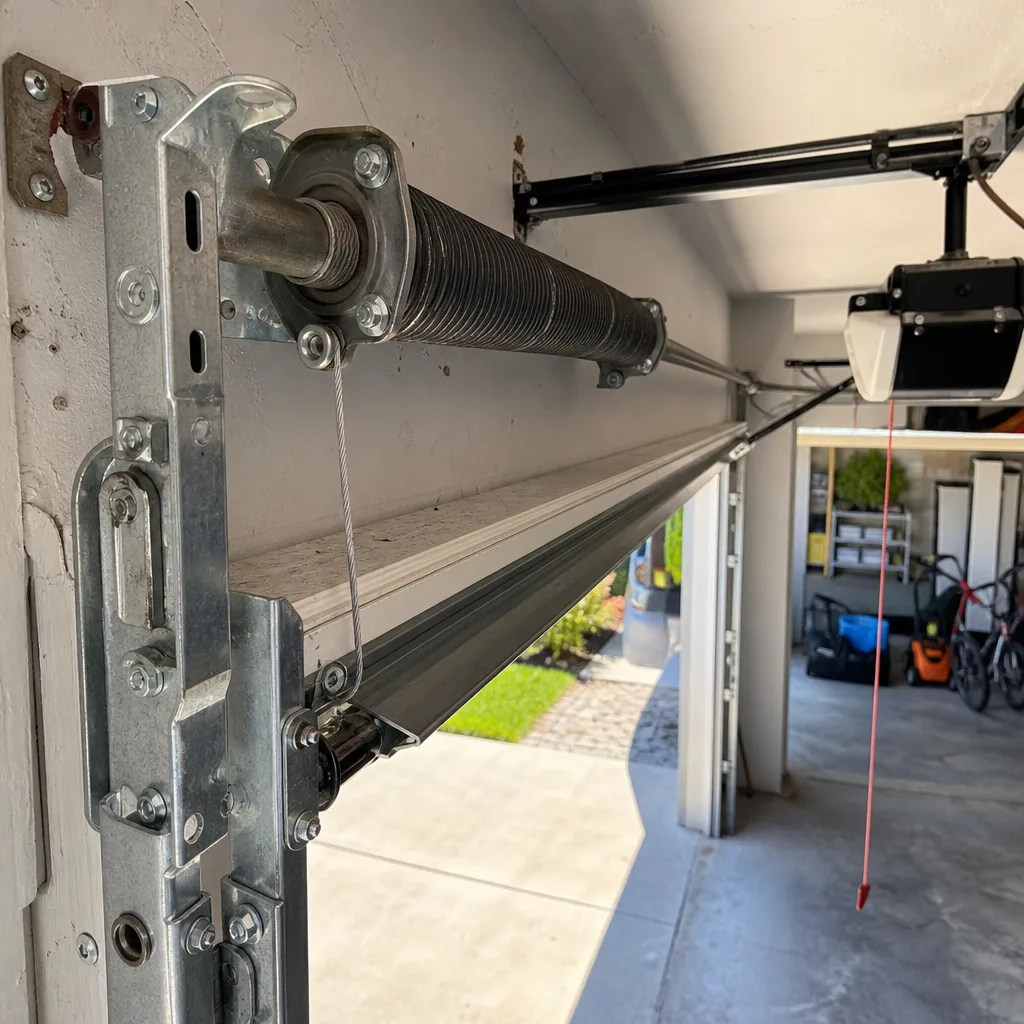 After
After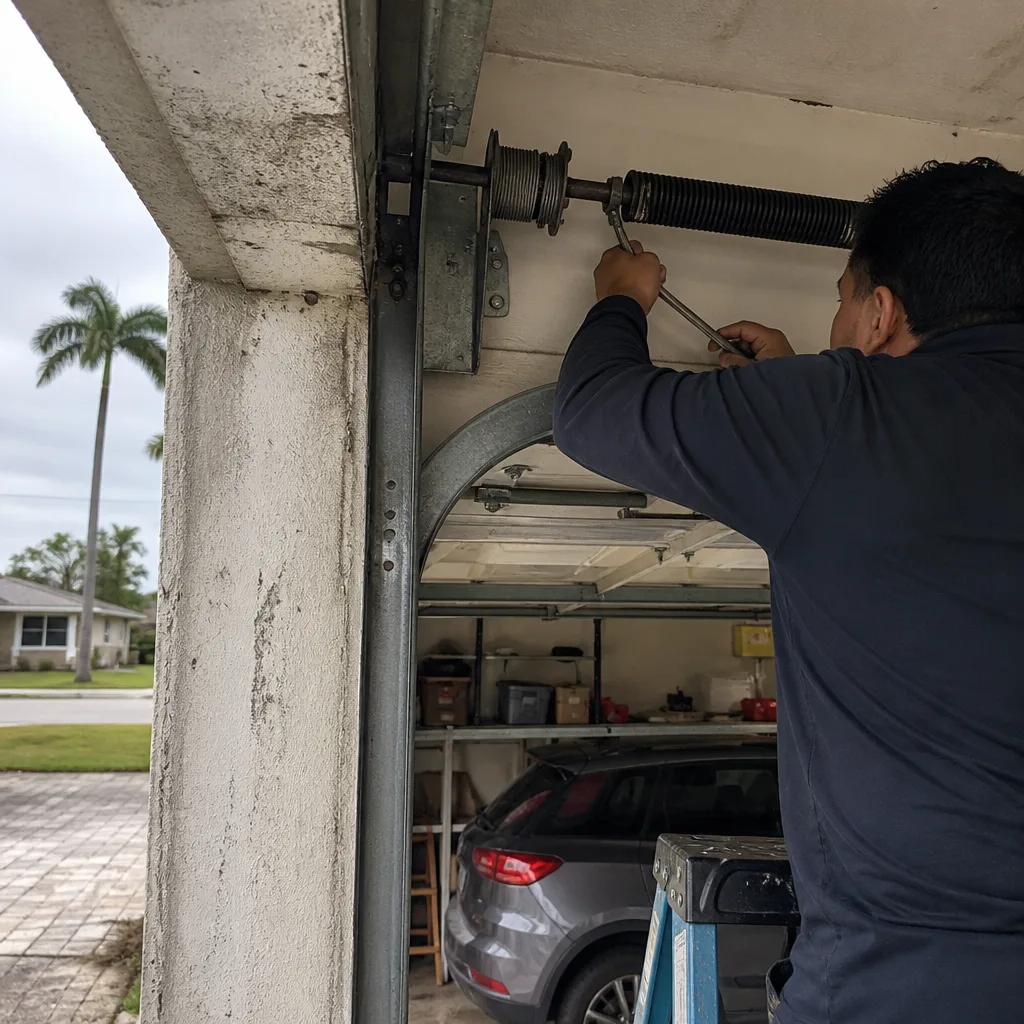 Before
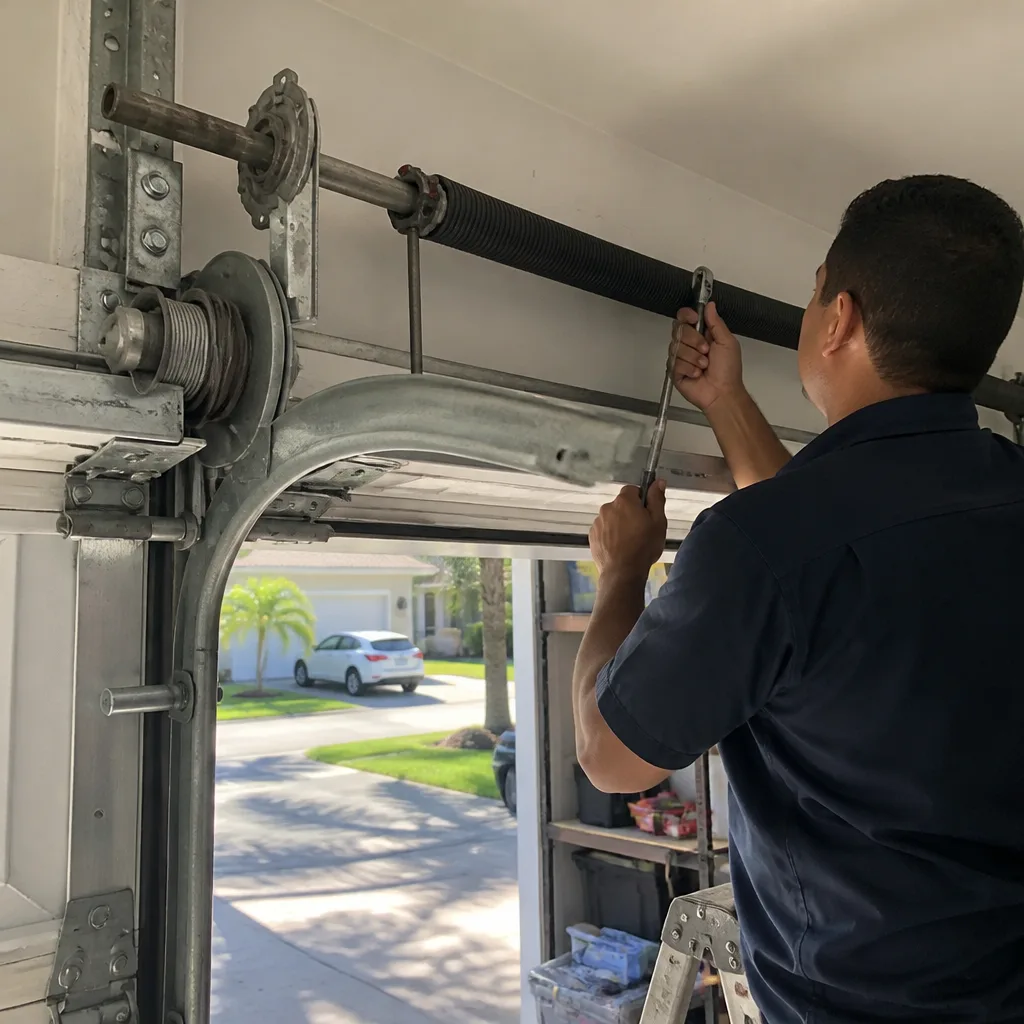 After
After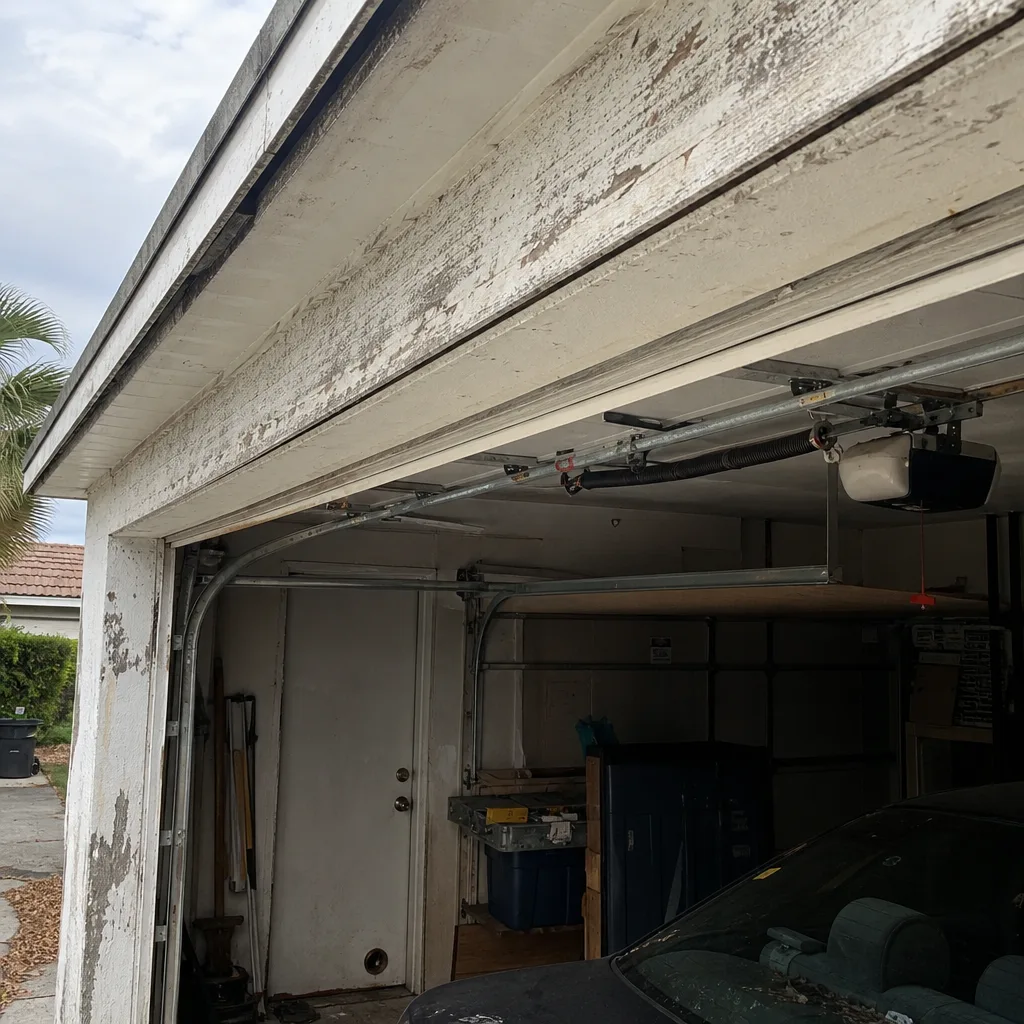 Before
 After
After