
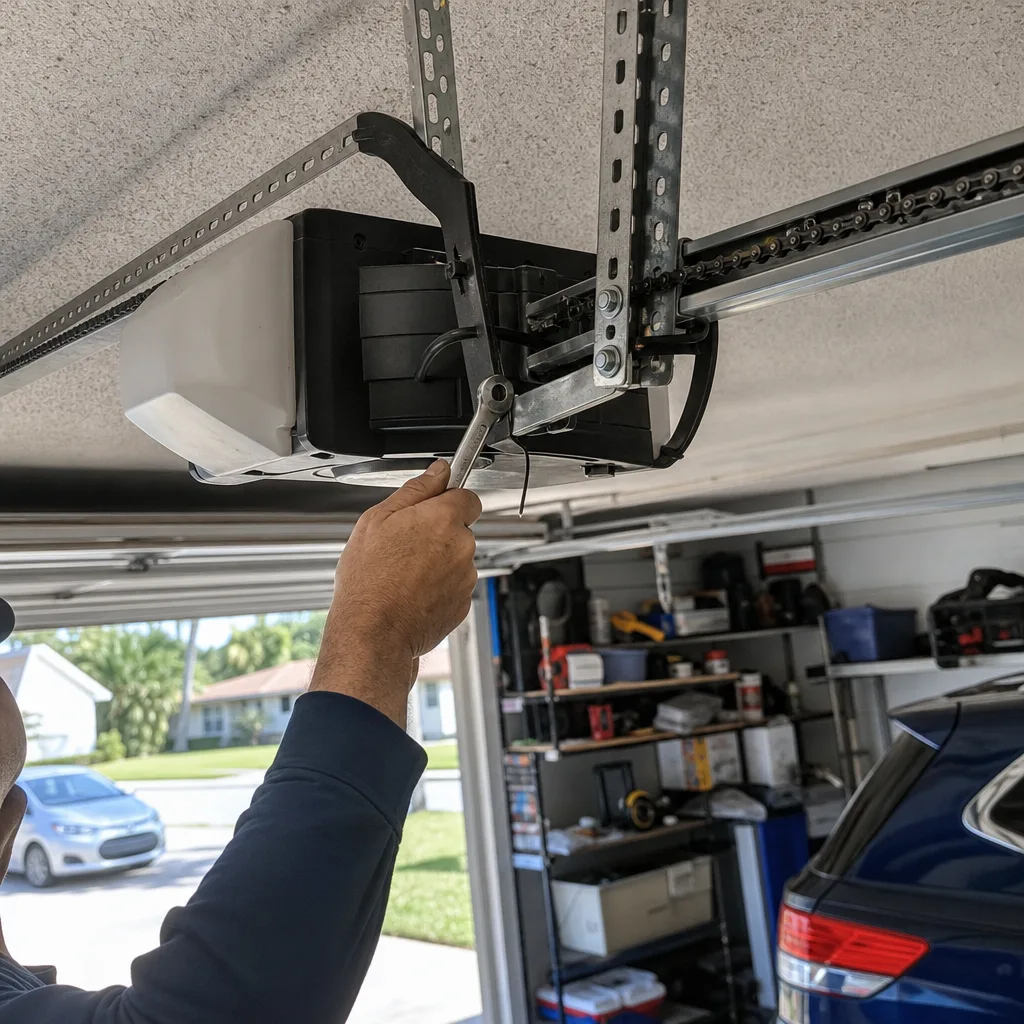
Last updated October 16, 2026
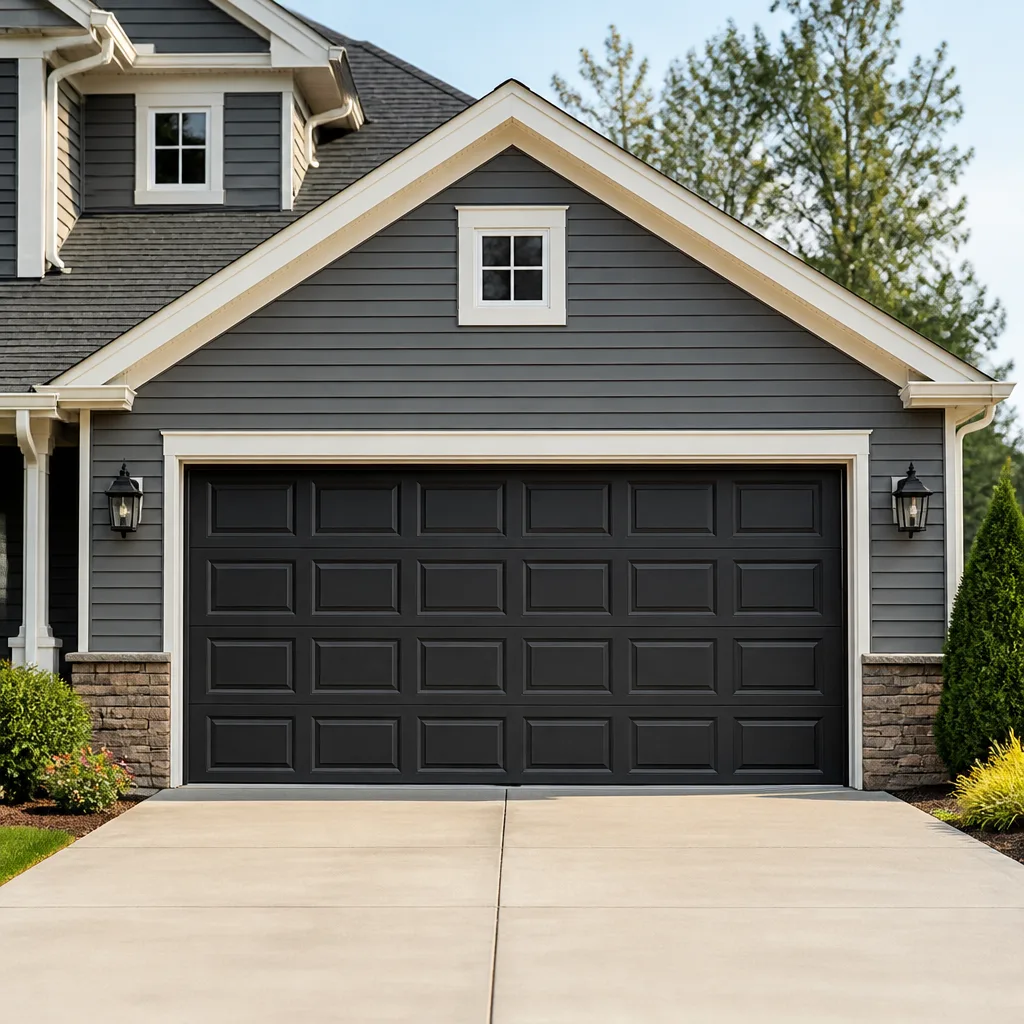 Raised-panel steel
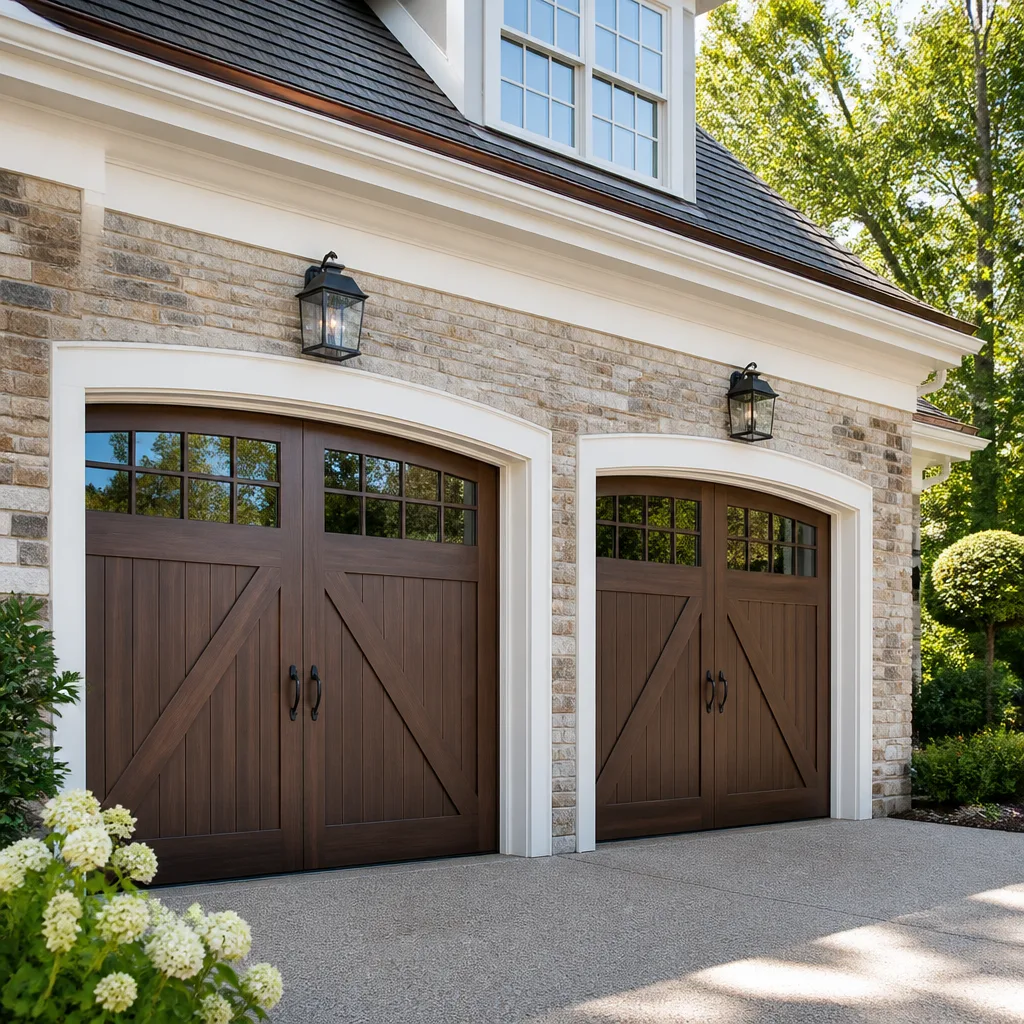 Carriage house
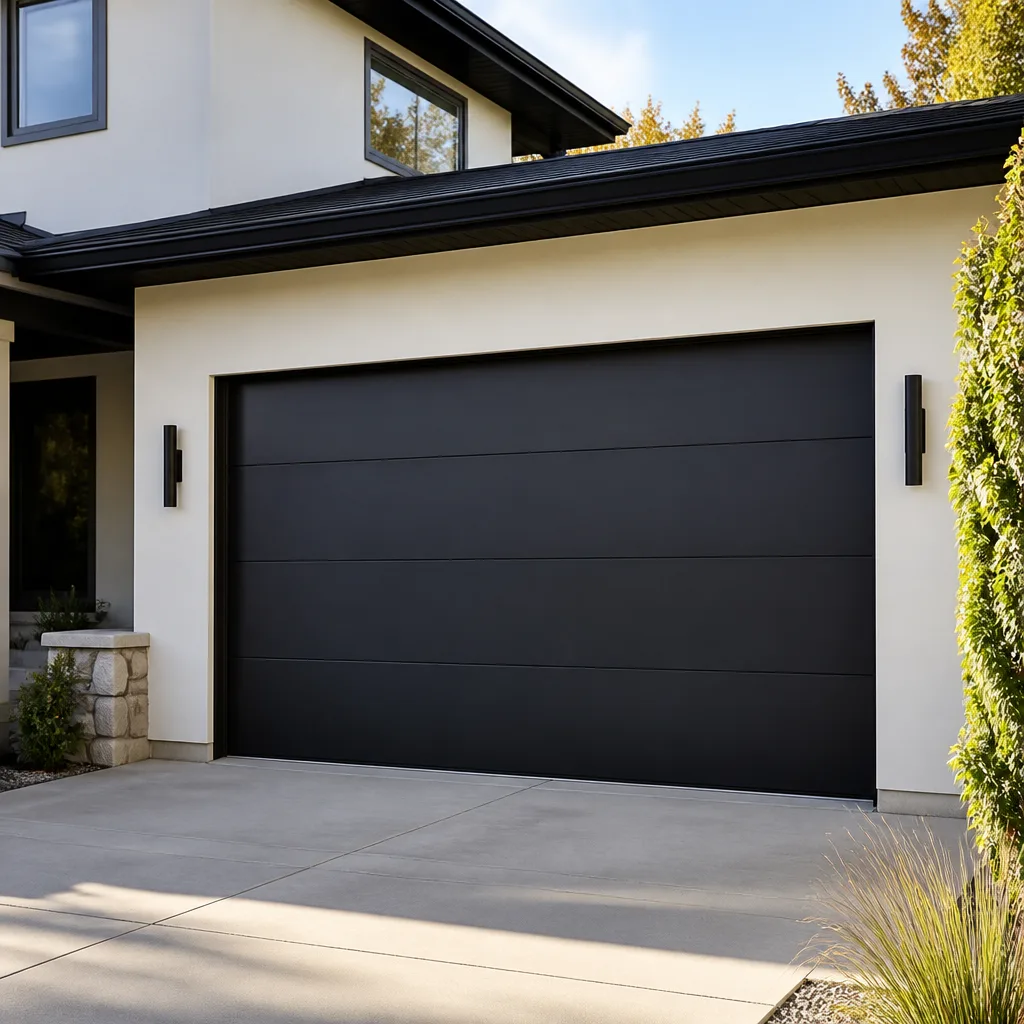 Modern flush
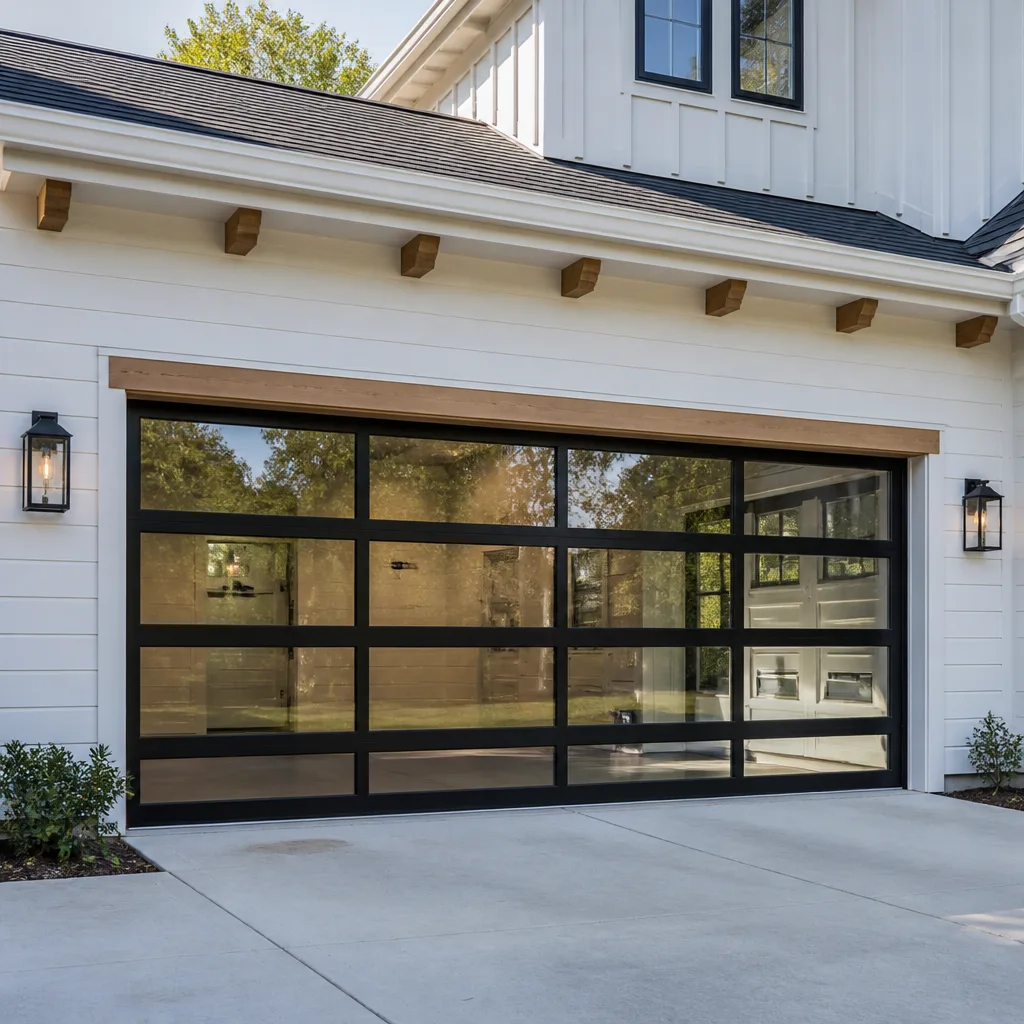 Full-view glass
 LiftMaster openers
 Chamberlain openers
Full 25-point door and opener safety check with every visit - springs, cables, rollers, tracks, and your LiftMaster or Chamberlain opener included
You get a price before we start. It does not change when the truck arrives.
Get your free estimateDIY vs Professional Garage Door: The Fort Lauderdale Homeowner’s Decision Guide
Adjusting your garage door’s travel limits is a legitimate DIY task. Replacing a torsion spring in Fort Lauderdale is not. And in a High-Velocity Hurricane Zone, doing the latter yourself can void the door’s Florida Product Approval, the document your insurer cares about when a claim lands on their desk. This guide draws the exact line between what a careful homeowner can handle safely and what requires a trained professional, without pushing you toward either side. By the time you finish reading, you’ll know which tasks fall under Broward County contractor licensing rules, which ones you can do with basic tools, and how a DIY attempt on a hurricane-rated door can affect your warranty, your insurance standing, and the future resale value of your home in Fort Lauderdale. We’re a Brock Garage Doors Fort Lauderdale home team led by Wade Mercer, and we’ve answered these questions for homeowners across the city since 2001. The honest answer is rarely “do it all yourself” or “call us for everything.” It’s a line, and the line is clearer than you think.
Quick Answer
For most garage door tasks in Fort Lauderdale, the answer is split: lubrication, sensor alignment, remote programming, and visual inspection are safe DIY jobs. Torsion spring replacement, cable work, panel replacement on hurricane-rated doors, and any repair that touches the door’s structural rating fall under professional territory, both for safety reasons and because Broward County’s HVHZ code requires work that maintains specific wind-load ratings to be handled by people who know what those ratings mean. If the repair affects how the door performs in a storm, call a professional. If it’s maintenance that keeps the moving parts clean and aligned, you can likely handle it this afternoon-see our Garage Door Repair Maintenance Checklist for Fort Lauderdale Homeowners for a step-by-step guide.
Styles & brands we work with
Table of Contents
- The Legal Line: What Broward County Says You Can and Can’t Do
- Safe DIY Tasks: Lubrication, Sensors, Remotes, and Inspection
- Hard Stops: Torsion Springs, Cables, and Hurricane-Rated Hardware
- What a DIY Repair Does to Your Warranty and Florida Product Approval
- Cost Comparison: DIY Parts vs Professional Repair in Fort Lauderdale
- You Already Tried the Repair. Now What to Tell a Contractor
- How to Choose a Contractor You Won’t Regret Calling
The Legal Line: What Broward County Says You Can and Can’t Do
Florida law draws a line between maintenance and structural work, and that line matters more in Fort Lauderdale than in most places. The city sits inside a High-Velocity Hurricane Zone, which means garage doors here are not just doors. They are engineered components of a building envelope rated to withstand specific wind pressures. Florida Building Code Section 16 requires that any work affecting a door’s structural performance, including spring replacement, cable work, track modification, and panel replacement on impact-rated doors, be performed by someone who understands the load calculations behind those components. In practice, that means a licensed contractor or a technician working under one.
But the law also leaves room for routine maintenance. Lubricating hinges and rollers, cleaning sensors, checking bolt tightness, and programming a remote opener are not structural modifications. They don’t alter the door’s wind resistance, they don’t require permits, and they don’t void product approvals. A careful homeowner can do these without running afoul of Broward County’s licensing requirements.
What trips people up in Fort Lauderdale is the gray area between these two categories. Replacing a broken roller sounds simple, but on many hurricane-rated doors from Raynor or LiftMaster, removing the bottom bracket means releasing cable tension. Release cable tension incorrectly and you have a snapped cable, a dropped door, and possibly an injured hand. The task started as maintenance and became structural in the time it takes to loosen a bolt. Wade Mercer, owner at Brock Garage Doors Fort Lauderdale, puts it this way: “If the part you’re working on was installed to keep the door on the tracks during a category 4 wind event, that’s not a weekend project.” The rule of thumb we give homeowners: if the part you’re touching carries load, it’s not DIY in this city.
Our Garage Door Repair in Fort Lauderdale team spends a fair amount of time correcting repairs that crossed that line. The damage is rarely catastrophic in the storm sense, but it’s often expensive. A homeowner replaces a spring with the wrong wire size and the opener burns out within six months. A cable gets re-strung backward and the door rides crooked until the track bends. These are not rare outcomes. They’re the expected result when load-bearing work meets guesswork.
Safe DIY Tasks: Lubrication, Sensors, Remotes, and Inspection
Let’s be precise about what a homeowner can do safely in Fort Lauderdale. These four tasks require no special tools beyond a ladder, a rag, and maybe a can of spray lubricant you can buy at any hardware store on Commercial Boulevard. They don’t trigger licensing requirements, and they don’t void warranties as long as you do them correctly.
Here are the four safe DIY tasks, with the details that matter:
- Lubrication: Use a white lithium or silicone-based spray on the hinges, rollers, and the torsion spring coil itself. Do this every six months in Fort Lauderdale’s salt-heavy air, which accelerates rust on metal parts near the coast. Wipe the track clean but don’t lubricate the track itself. Grease on the track attracts sand and grime, and sand in South Florida is not something you want grinding against your rollers.
- Sensor alignment: The photo-eye sensors sit near the bottom of each track. If your door reverses for no reason, check that both sensors face each other and that neither lens is clouded by salt film or dust. Loosen the wing nut, adjust the sensor until the indicator light stays solid, and tighten. This fix takes ten minutes and solves roughly a third of the “my door won’t close” calls we get.
- Remote and keypad programming: Every major brand, including Chamberlain, Genie, and LiftMaster, publishes programming instructions in the owner’s manual or online. This is a legitimate DIY task. You’re not touching anything structural; you’re syncing a transmitter. Follow the manufacturer’s steps exactly and you’ll be fine.
- Visual hardware inspection: Once a month, close the door and look at the cables, springs, hinges, and mounting brackets. You’re looking for frayed cable strands, gaps in the spring coil, rust at the bracket welds, and loose bolts. You’re not fixing any of these things. You’re noticing them before they fail, which is the entire point of inspection.
For each of these tasks, the failure mode is annoyance, not injury. If you lubricate the wrong spot, the door still works, it just stays squeaky. If you misalign a sensor, the door won’t close and you try again. That’s the difference between safe DIY and dangerous DIY: safe tasks fail gently, and you can try again without risk to your hands, your door, or your home’s wind rating.
Hard Stops: Torsion Springs, Cables, and Hurricane-Rated Hardware
Some garage door components store enormous mechanical energy, and in Fort Lauderdale, some of them also carry legal liability. Here are the hard stops: jobs you should not attempt yourself, full stop.
Torsion Spring Replacement
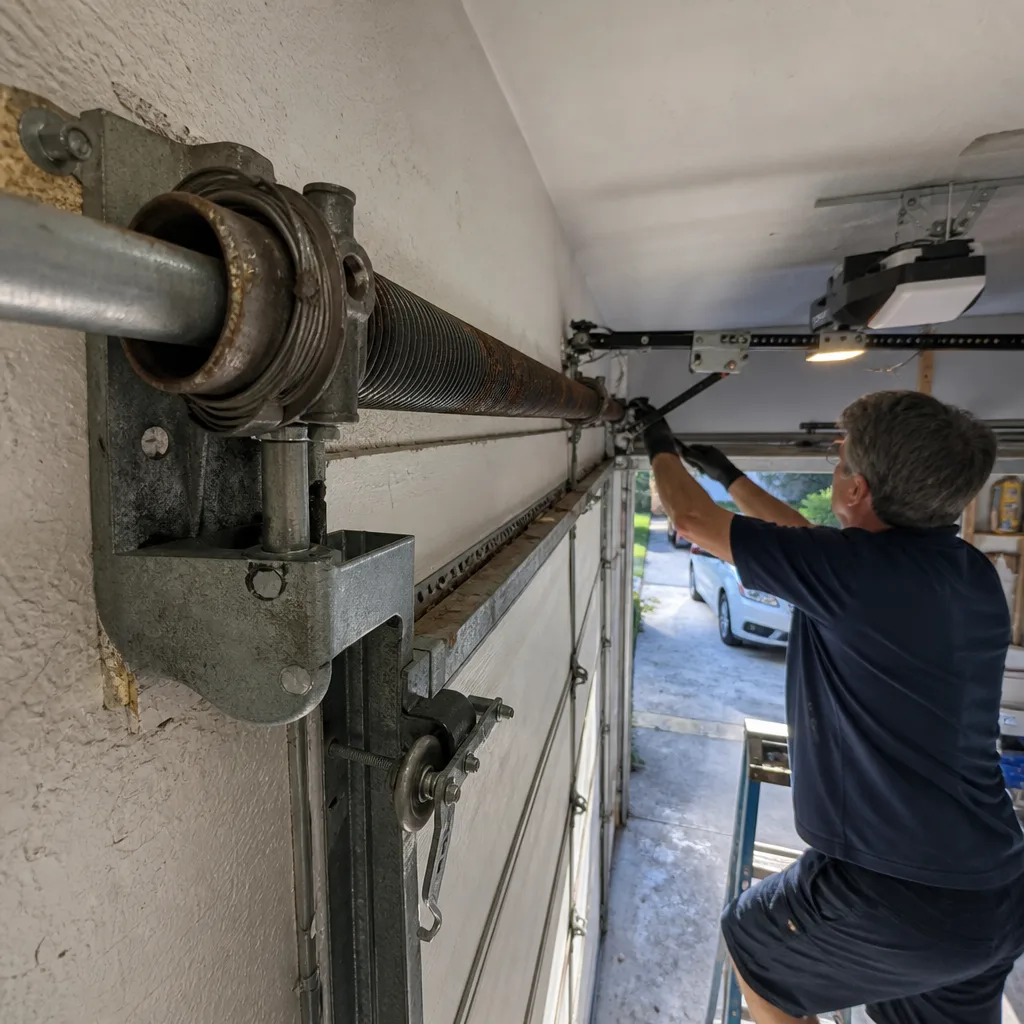
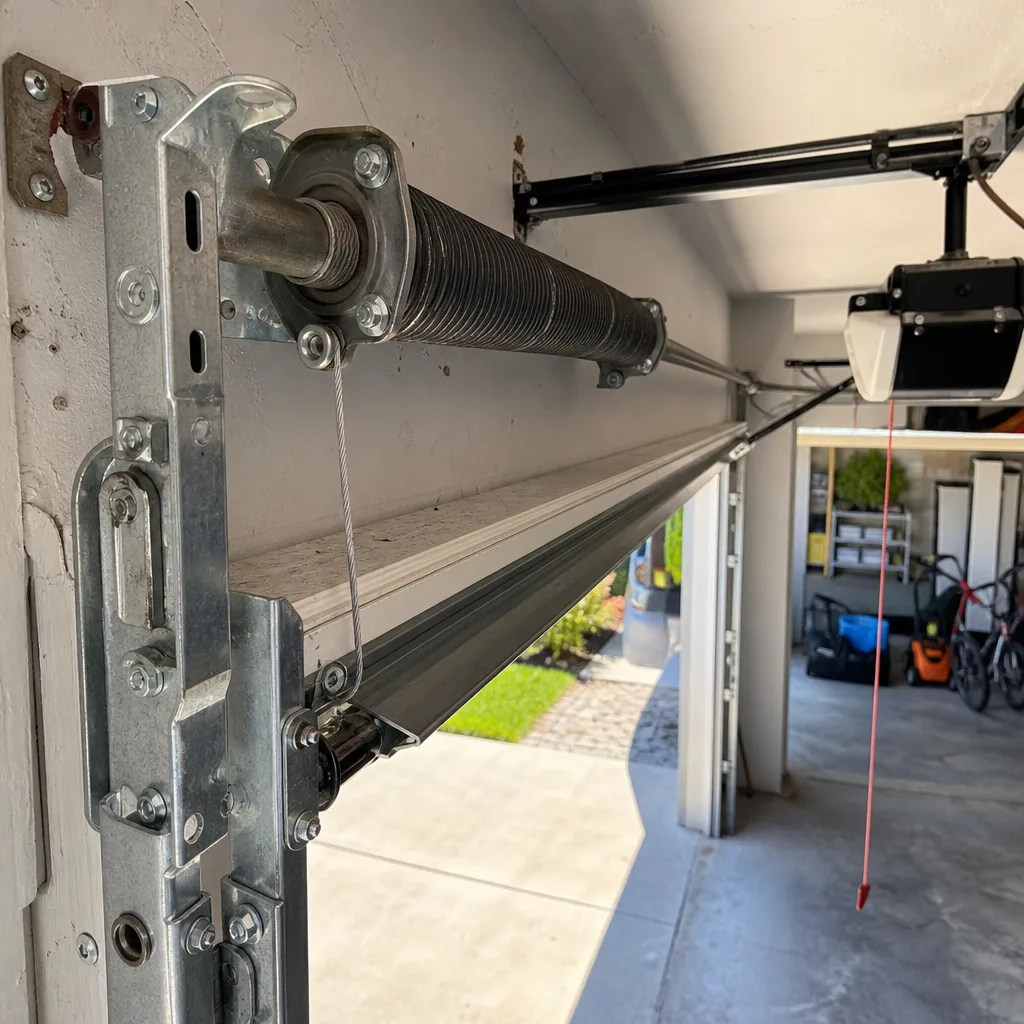
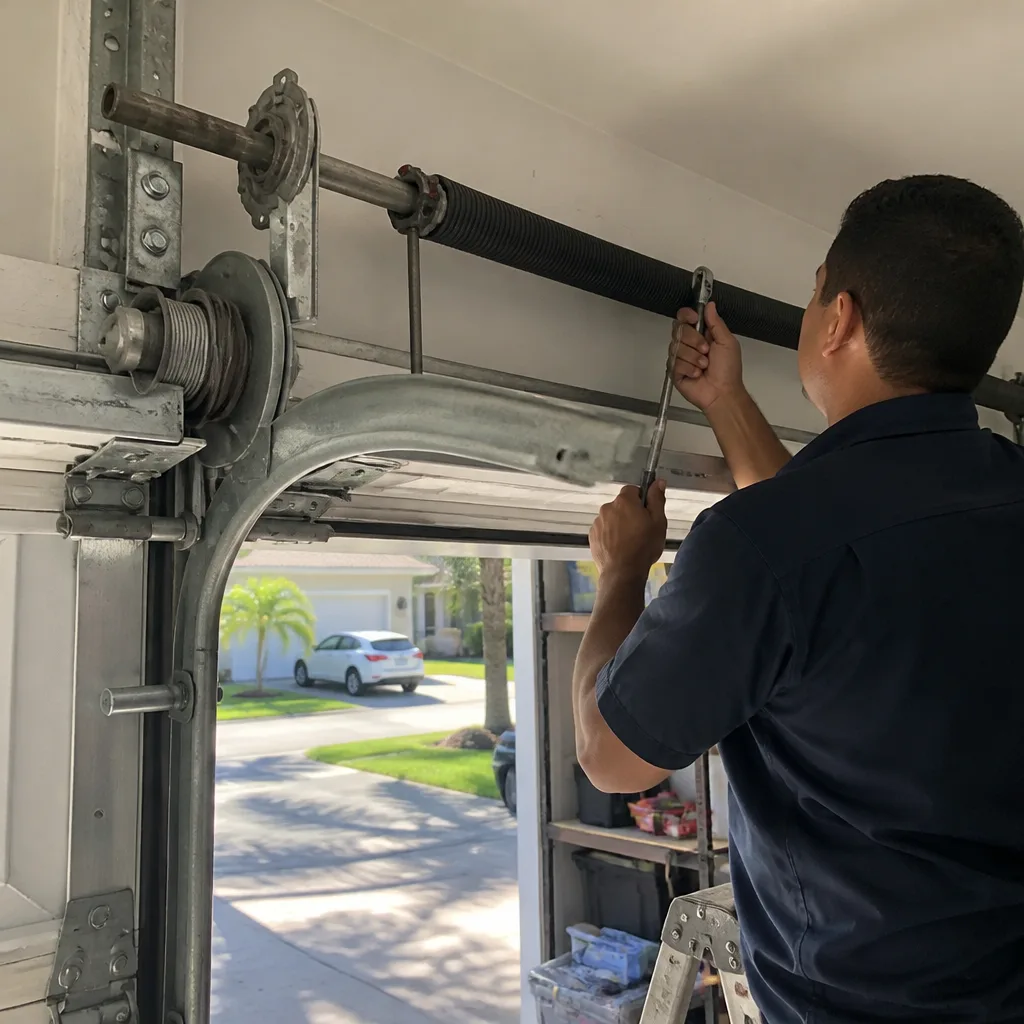
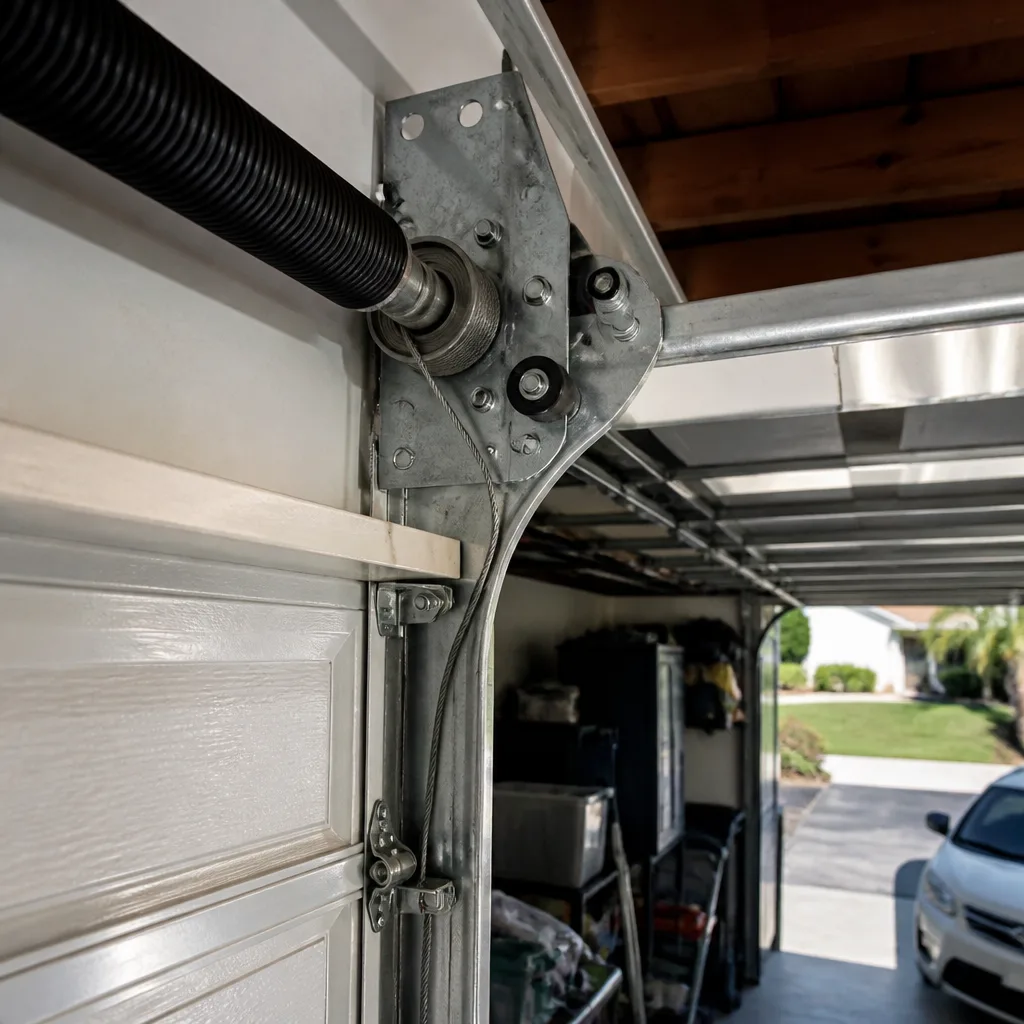
A torsion spring is the thick coiled spring mounted above the door. It bears most of the lifting load, and when it breaks, it releases that load suddenly. People have lost fingers, hands, and in rare cases their lives to torsion spring failures. Replacing one requires winding bars, precise tension calculations, and knowledge of the door’s weight and balance. Get the tension wrong and the door can launch upward, shear a mounting bolt, or come down on someone standing beneath it. This is not a skill you learn from a YouTube video. In Fort Lauderdale, it’s also not a legal DIY task when the door carries a Florida Product Approval, because the spring’s wire size and tension rating are part of the door’s wind-resistance certification. We carry the parts on the truck for this repair because it’s the highest-frequency emergency call we run across Fort Lauderdale and we’d rather fix it right the first time.
Cable Replacement
Garage door cables work under tension at all times. The cable runs from the bottom bracket, over the drum, and connects to the spring system. If a cable frays and you try to replace it without releasing spring tension properly, the cable can whip, the drum can spin, and the door can drop. The springs must be unwound first. That’s the step most people skip, because unwinding a torsion spring is itself a dangerous task. This is why Garage Door Cable Repair in Fort Lauderdale is a service that starts with spring de-tensioning, not with the cable itself.
Panel Replacement on Impact-Rated Doors
If your garage door has a Florida Product Approval label, every panel is part of an engineered system. A replacement panel must match the original in weight, gauge, and impact rating. If it doesn’t, the door no longer meets the wind-load rating filed with Broward County. Your insurer can deny a wind claim on that technicality. This is not a hypothetical. We’ve seen it happen in neighborhoods like Victoria Park and Rio Vista after storm seasons, where homeowners who replaced their own panels discovered the hard way that “it looks the same” is not what the insurance adjuster is checking.
Opener Replacement on Heavy Hurricane Doors
An opener replacement sounds straightforward. You bolt the motor to the ceiling, attach the rail, and plug it in. But on a hurricane-rated door in Fort Lauderdale, the opener’s force settings must be adjusted to compensate for the door’s added weight. If the openers you’re considering from Chamberlain or Genie isn’t calibrated to a heavier impact-rated door, the motor strains, the gear strips, and the opener fails early. This is a job that can be DIY in some regions, but in HVHZ territory, it’s worth having someone who knows the door’s actual weight involved. Our Garage Door Opener Repair in Fort Lauderdale service handles this calibration daily.
What a DIY Repair Does to Your Warranty and Florida Product Approval
Every hurricane-rated garage door sold in Fort Lauderdale carries two documents: a manufacturer’s warranty and a Florida Product Approval, which is the state’s certification that the door meets specific wind-load standards. The two are linked, and a DIY repair can damage both.
The manufacturer’s warranty typically covers defects in materials and workmanship for a set period, but nearly every warranty from major brands including Raynor, LiftMaster, and Clopay contains language voiding coverage if the door is serviced improperly or disassembled by someone untrained. Replacing a spring with the wrong size, re-stringing a cable, or installing a non-approved panel gives the manufacturer a reason to deny a future claim. That’s their right, and it’s written in the fine print.
The Florida Product Approval is a different animal. It’s a state document filed with the Building Code Information System. Your door’s wind rating is tied to the specific components it was tested with. Change any load-bearing component and the approval may no longer describe the door that’s actually installed on your house. If a storm damages the door and your insurance company discovers the door was modified with unapproved parts, the wind claim gets complicated fast. Some adjusters will deny outright. Others will pay a reduced amount. None of them will care that the spring you bought from an online parts site looked identical to the original.
In practice, what this means for a Fort Lauderdale homeowner is straightforward: on a non-load-bearing maintenance task, DIY is fine and the warranty is generally unaffected. On any task that touches the spring system, cables, track geometry, panel structure, or wind-load components, the smart move is to have a professional do the work and document it. A written invoice that shows the correct parts were installed by a trained technician is evidence you can hand to an insurer. A PayPal receipt for a spring you bought online is not.
Cost Comparison: DIY Parts vs Professional Repair in Fort Lauderdale
The DIY decision usually comes down to money. Fair enough. For a deeper look at pricing, see our Garage Door Cost Breakdown: The Fort Lauderdale Homeowner’s Reference for 2026; here are realistic numbers for the Fort Lauderdale market, based on what we see and what parts actually cost in this area.
| Task | DIY Parts Cost | Professional Cost (Fort Lauderdale) | Key Difference |
|---|---|---|---|
| Lubrication and inspection | $10 – $20 (lubricant, rag) | $75 – $125 if bundled with tune-up | DIY is clearly fine here |
| Sensor alignment | $0 (you already own the tools) | $85 – $140 service call | DIY is fine if you know the fix |
| Remote programming | $0 – $5 (nothing to buy) | $65 – $110 for reprogramming service | DIY is fine, follow the manual |
| Roller replacement (single) | $8 – $18 per roller | $120 – $190 including labor | DIY only if no cable tension involved |
| Cable replacement | $25 – $50 per cable | $150 – $275 depending on cable type | Professional strongly recommended |
| Torsion spring replacement | $60 – $120 per spring online | $180 – $340 including both springs | Professional required, safety and legal |
| Panel replacement (impact-rated) | $150 – $400 per panel if you can find one | $300 – $800 per panel installed | Professional required to keep approval valid |
The pattern here is obvious once you see it: DIY saves real money on the top four tasks and creates real risk on the bottom three. The torsion spring numbers are especially telling. A homeowner can buy a spring online for $60 and install it wrong, then pay $500 to fix the damage. Or they can pay $250 once and have a spring installed with the correct wire size, the correct tension, and a written guarantee behind it.
In Fort Lauderdale specifically, the salt air means components corrode faster, which means more frequent replacements and more temptation to cut corners. We recommend against it. A spring that costs $60 online is often a generic part with no wind-load certification attached. The spring your hurricane-rated door needs is a specific component sized to that door’s weight and rating. They are not interchangeable, and the price difference exists for a reason.
You Already Tried the Repair. Now What to Tell a Contractor
Plenty of homeowners attempt the repair, realize halfway through that they’re in over their head, and then call us. Here’s what to do in that situation, in order:
- Stop working immediately. Don’t try to “finish up” before the technician arrives. A half-done spring wind is more dangerous than a fully wound one, and you’re increasing the risk of injury every time you touch it.
- Take photos of what you did. Before you call, snap clear pictures of the parts you removed, the parts you installed, and the current state of the door. This helps us understand what we’re dealing with and saves diagnostic time.
- Tell us everything when you call. Be specific: “I bought a spring from an online parts site and wound it about 12 turns before I heard a noise and stopped.” This is not embarrassing. It’s information. And it protects you.
- Don’t try to hide the attempt. If you’ve used the wrong parts or made a mistake, we will see it anyway. The only thing hiding accomplishes is wasted time and a more expensive repair.
- Ask what the repair will cost before anyone touches the door. At Brock Garage Doors Fort Lauderdale, the written price comes before any work starts, and that’s a policy Wade Mercer set from day one because he’s seen too many homeowners get burned by moving quotes.
Disclosure especially matters when a written guarantee is involved. If you tell us you replaced the spring yourself and then the door fails two months later, we know the failure is likely related to the prior work, and we can address it accurately. If you don’t disclose it and the same repair gets covered under our 365-day guarantee, you’re asking us to warranty someone else’s mistake. That’s not a sustainable arrangement for anyone. Honest disclosure on the front end means we can fix the right problem the first time, and you get a clear understanding of what’s covered.
How to Choose a Contractor You Won’t Regret Calling
If you’ve read this far, the pattern should be clear: some jobs are DIY, some are not, and the ones that are not need a contractor who knows Fort Lauderdale’s specific code requirements. But not all contractors are equal, and homeowners in this city have legitimate reasons to be skeptical. No-shows, verbal quotes that double at the door, technicians who leave a mess, repairs that fail three weeks later. We’ve heard every version of this story, and most of them are true.
Here are the questions to ask any garage door company before you let them touch your door:
- Is the price in writing before work starts? If the answer is anything other than “yes,” walk away. A verbal estimate means the number can change once the door is open and you’re committed.
- Is the guarantee in writing? A one-year promise that isn’t written down is a one-week promise in practice. Get it on paper.
- Do your technicians work on my brand? A technician who only knows one brand will apply a generic fix to a specific system. We train on eight major brands including LiftMaster, Chamberlain, Genie, and Raynor for exactly this reason.
- Are technicians background-checked and uniformed? You’re letting a stranger into your garage. You deserve to know who they are.
- Does a live person answer the phone? Call after hours. If you get a voicemail tree, that’s how they’ll treat you when your door breaks at 9 p.m.
Wade Mercer built Brock Garage Doors Fort Lauderdale around these standards because he saw what the opposite looked like. As an independently owned and operated location within the Garrison Partners network, we work to The Garrison Standard on every call: show up in the window, hand over a written price, do the work by the book, leave the site clean, and back it in writing for a full year. The 365-Day Done Right Promise isn’t a slogan. It’s a sentence on every invoice. If a covered repair fails within that year, we return and make it right at no charge. If that requires a second visit, that visit is also free. This is not a fee item or a negotiation. It’s the standard.
Common Mistakes to Avoid
- Buying the cheapest spring you can find online. Generic springs are not rated for hurricane doors, and the money you save gets spent on the repair that comes after the spring fails or the door gets damaged. Buy the right part or don’t buy at all.
- Assuming you can “just adjust” a torsion spring you didn’t install. Torsion springs are wound under extreme tension. Unless you know exactly how many quarter-turns are on that spring, any adjustment is a guess, and a wrong guess in Fort Lauderdale’s HVHZ environment means a door that no longer meets its wind rating.
- Watching one YouTube video and calling it research. A video filmed in Ohio on a non-rated steel door does not apply to a hurricane-rated Raynor in Broward County. Climate, code, and door type all change the job.
- Ignoring a door that’s making noise. Squeaking, rattling, or grinding almost never goes away on its own. In Fort Lauderdale’s humidity, a small rust issue becomes a seized roller or a snapped spring within a season.
- Not knowing your door’s Florida Product Approval status. If you don’t know whether your door is impact-rated, find out before you touch anything structural. The approval label is usually on the inside of the door panel or the track.
- Trying to hide a failed DIY attempt. It doesn’t work, it wastes time, and it can lead to a misdiagnosis that makes the problem worse.
- Calling the first number you see without checking the company. Fort Lauderdale has plenty of solid garage door companies and plenty of trunk-slammers. The difference is visible in how they answer your questions.
See the difference
 Before
 After
After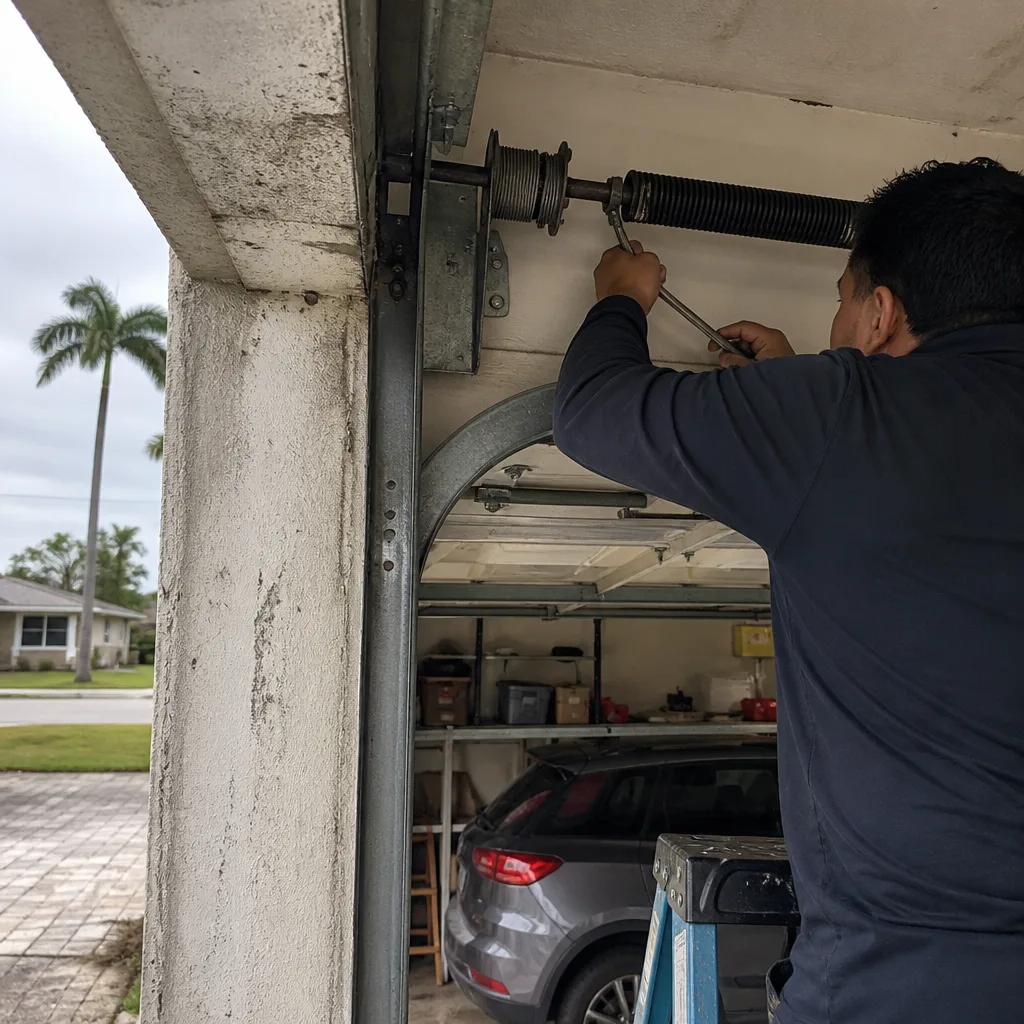 Before
 After
After Before
 After
AfterWhen to Call a Professional
Call a professional when the spring breaks, when a cable frays, when the door comes off its tracks, when a panel gets dented on a hurricane-rated door, or when the door won’t open and you can’t immediately see why. Call when the repair touches any load-bearing component. Call when you’ve tried the DIY fix and it didn’t work, and be honest about what you attempted. Call when you want the work documented for insurance purposes. Brock Garage Doors Fort Lauderdale offers free estimates in Fort Lauderdale. Call (754) 354-7491 and a live person answers, day or night. You’ll get a written price before any work begins and a written one-year guarantee on the repair. That’s the standard we’ve been keeping since 2001.
Frequently Asked Questions
You can physically buy a spring and attempt to install it, but you should not. Torsion springs store enough energy to cause serious injury, and on hurricane-rated doors, the spring’s wire size and tension are part of the door’s Florida Product Approval. Installing a generic spring voids that approval and gives your insurer a reason to deny a future wind claim. Call (754) 354-7491 for a written quote. Most spring replacements in Fort Lauderdale run $180 – $340.
Most repairs in the Fort Lauderdale market run between $150 and $350 depending on the part and the door. Cable repairs typically run $150 – $275. Torsion spring replacement runs $180 – $340. Sensor and remote programming fixes run $65 – $140. Impact-rated panel replacement is more, usually $300 – $800 per panel installed. These are the numbers we quote from our trucks every day. Call (754) 354-7491 for an exact quote before you commit to anything.
Not with a company that writes the price down before work starts. The number on your invoice should match the number you approved. That’s how Brock Garage Doors Fort Lauderdale operates: the written price is handed over before any work begins, and if the technician finds additional problems mid-repair, you’ll be told and asked to approve any changes in writing before anything extra is done. Call (754) 354-7491 to get a quote that stays a quote.
Our trucks carry a full range of torsion springs, cables, rollers, hinges, brackets, and opener parts because Fort Lauderdale homeowners should not have to wait a week for a door that’s standing open. Most spring and cable repairs are completed the same day. If we don’t have a specialized part for an unusual door, we’ll tell you before we start, not after we’ve taken the door apart.
Generally no. If a DIY repair results in injury, your homeowners policy may cover medical costs through liability coverage, but the repair itself and the damage it causes to the door are typically excluded. And if the DIY work involves a hurricane-rated door, the modification can affect future wind claims. In Fort Lauderdale, where wind coverage is written into almost every policy, this is a risk you don’t want to take.
A live person answers calls at (754) 354-7491 around the clock, and for urgent repairs like a door that won’t close or a broken spring, we aim to have a technician at your Fort Lauderdale home the same day. Call and tell us what the door is doing. We’ll tell you what we think it is, what it’ll cost, and when we can have someone there.
The Bottom Line
The DIY-vs-professional question has a clear answer in Fort Lauderdale, and it’s not the same answer you’d get in most of the country. Safe maintenance like lubrication, sensor alignment, and remote programming is worth doing yourself. Anything that touches the spring system, cables, panels, or the door’s hurricane rating is professional territory, both for your safety and for your insurance standing. The money you save on a DIY spring repair is not worth the risk to your hands or the potential denial of a wind claim. And when you do call a professional, choose one who puts the price in writing before the work starts and backs the repair with a written guarantee. That’s the standard. You live in a city that demands it.
Written by Wade Mercer, Owner at Brock Garage Doors Fort Lauderdale, serving Fort Lauderdale since 2001.